Laowa Lens D-Dreamer 15 mm f / 2.0 Zero-D for Sony E
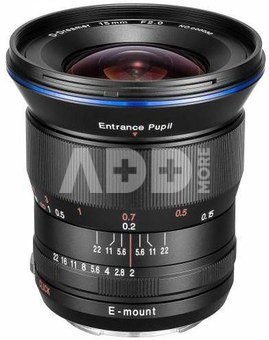
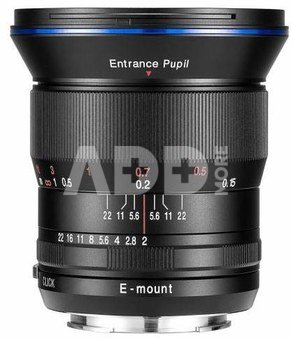
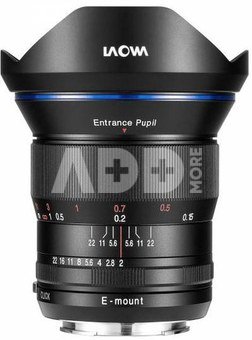
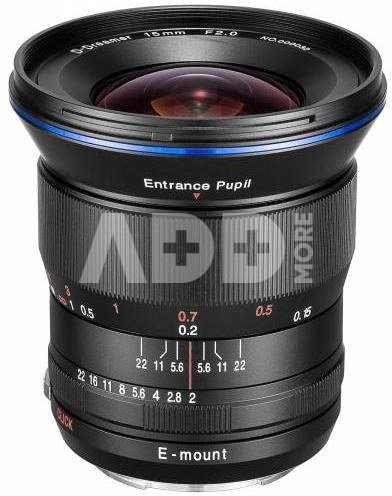
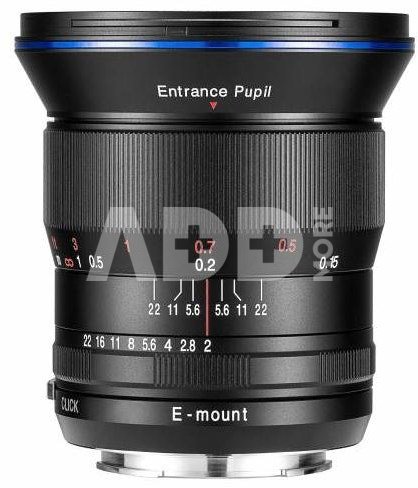
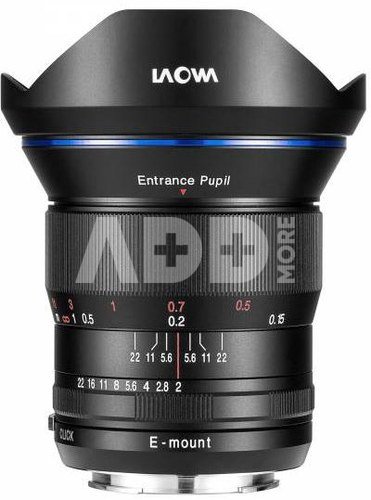
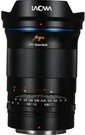
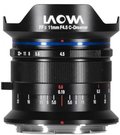
Laowa 15 mm f / 2.0 Zero-D is the brightest in the world rektalinearny lens with a focal length of 15 mm to fit into cooperation with the cameras Sony E. high brightness combined with a wide viewing angle (110 degrees) that makes the lens advises in a great many fields of photography, especially landscape, travel and astrophotography. Extremely compact design is appreciated by lovers of reportage, and the possibility of infinitely variable aperture works while shooting movies. Also noteworthy is the small minimum focusing distance of the lens of only 15 cm. lens construction consists of twelve elements arranged in nine groups. Three low dispersion lens and two aspherical lens provide superior image quality from edge to edge, even with the aperture wide open. Unlike other wide-angle lens front Laowy 15 mm f / 2.0 allows installation of standard photographic filters (diameter 72 mm). This feature will appreciate all enthusiasts and landscape architecture. smallest size and the lowest weight, of similar focal length of the lenses, make the lens Laowa 15 mm f / 2.0 Zero-D perfect pass of travel, as well as a handy tool everyday fan photograph. Specification - model D-Dreamer 15 mm f / 2.0 Zero-D - fixing Sony E - focal length: 15 mm - angle 110 deg - minimum aperture f / 2.0 - maximum aperture is f / 22 - the number of diaphragm blades 7 <
Discuss with a consultant in Kaunas
We don't have
Klaipėda Address: Birželio 23-iosios g. 23g Working hours: I-V 09:00 - 18:00 VI-VII not working Phone: +370 674 59488
Discuss with a consultant in Klaipėda
We don't have
Klaipėda Address: Taikos pr. 17 Working hours: I-V 10:00 - 19:00 VI 10:00 - 14:00 VII not working Phone: +370 604 43972
1. How to choose the right lens for a mirrorless camera?
When choosing the right lens for a mirrorless camera, it is important to consider your photography needs and style. First, decide on the resolution and focusing distance you require. For portraits, lenses with a wide aperture, such as a 50mm f/1.8, are often preferred. If you enjoy landscapes, go for a wide-angle lens (e.g., 24mm). To capture distant objects, telephoto lenses (e.g., 70-200mm) are useful. Another important factor is the lens’s light-gathering ability, which affects performance in low-light conditions. A stabilization system can also be important, especially for longer lenses. It’s important to evaluate the build quality of the lens and the manufacturer's reputation. Try out several lenses and consider your future needs to choose the right and long-lasting investment in your photography.
2. Are all lenses compatible with all mirrorless cameras?
Not all lenses are universal for all mirrorless cameras. Different manufacturers may have different mounts, so it is important to check the lens compatibility with your camera. For example, lenses for Canon, Nikon, Sony, and other manufacturers' mirrorless cameras may not be interchangeable without adapters. It is also important to consider the sensor size. APS-C lenses may be disproportionately large for full-frame cameras. Before purchasing a lens, it is advisable to check the manufacturer's compatibility chart and consider the specific requirements of your camera. Adapters can allow the use of third-party lenses, but there may be some loss in functionality or quality.















Reviews
0 average rating (0 votes)