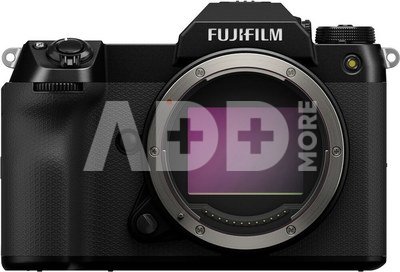
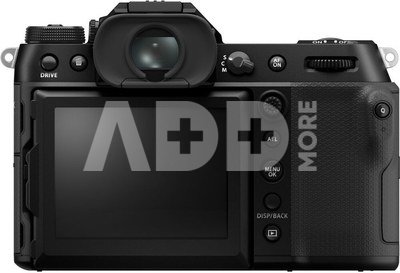
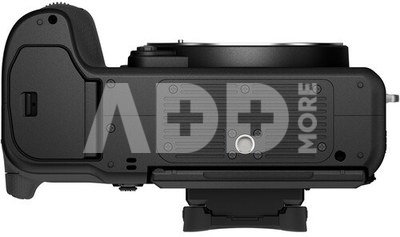
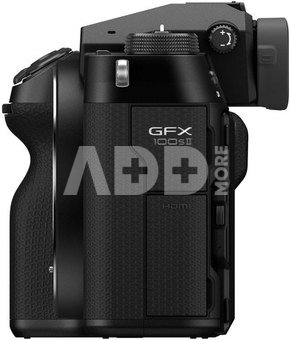
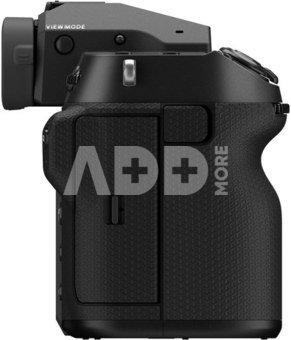
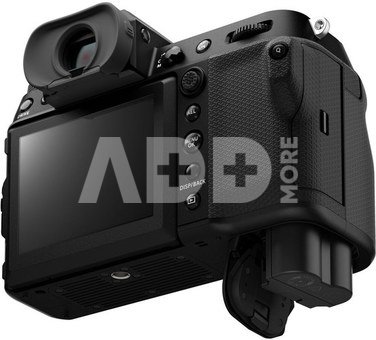
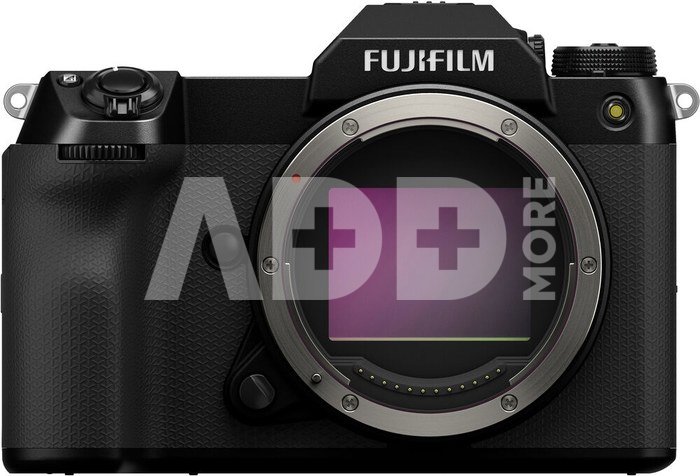
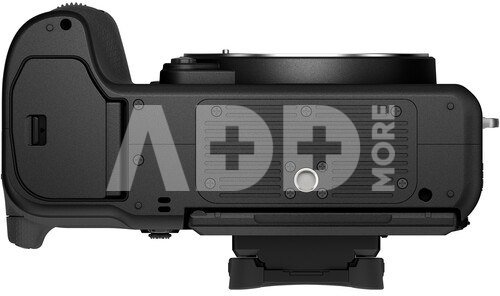
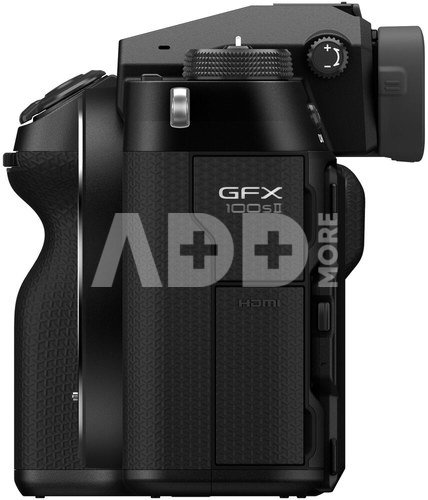
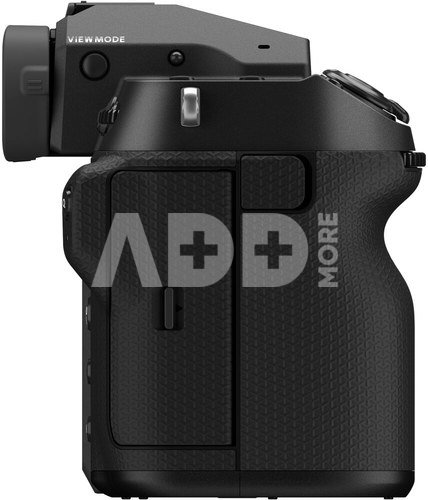
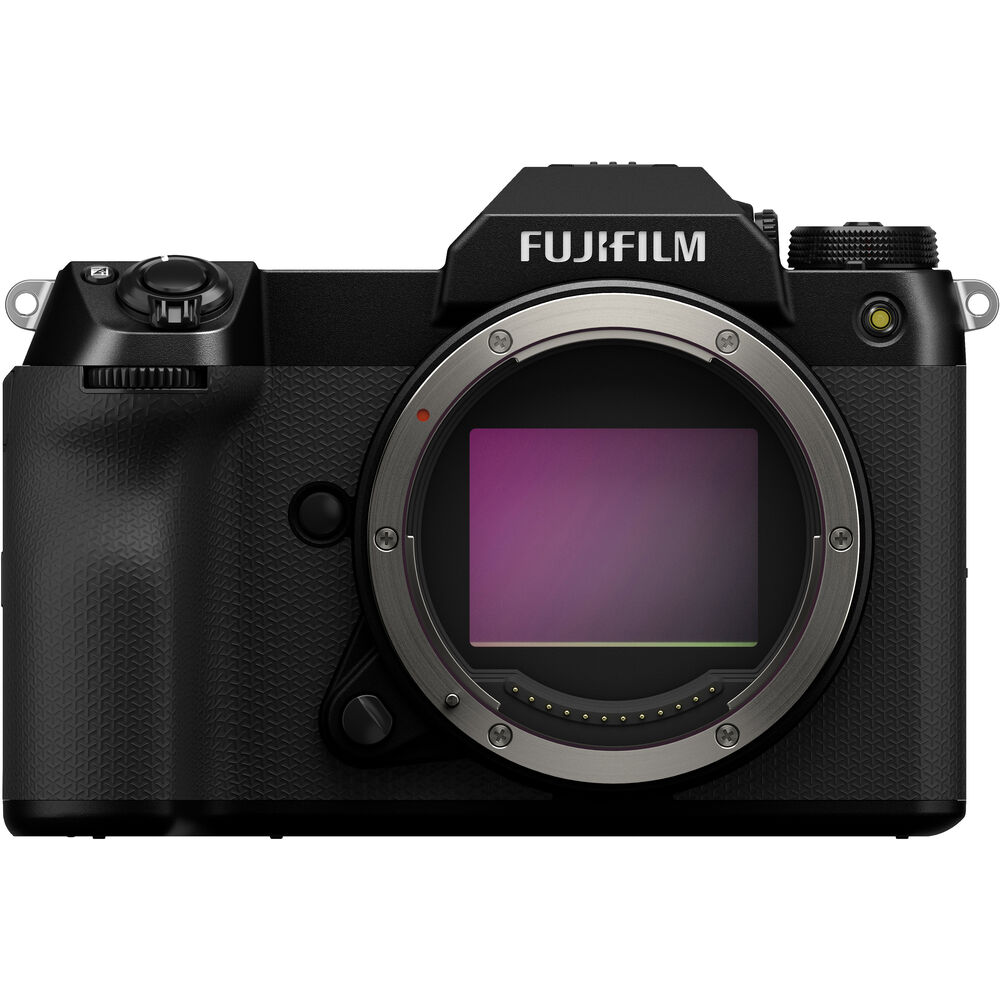
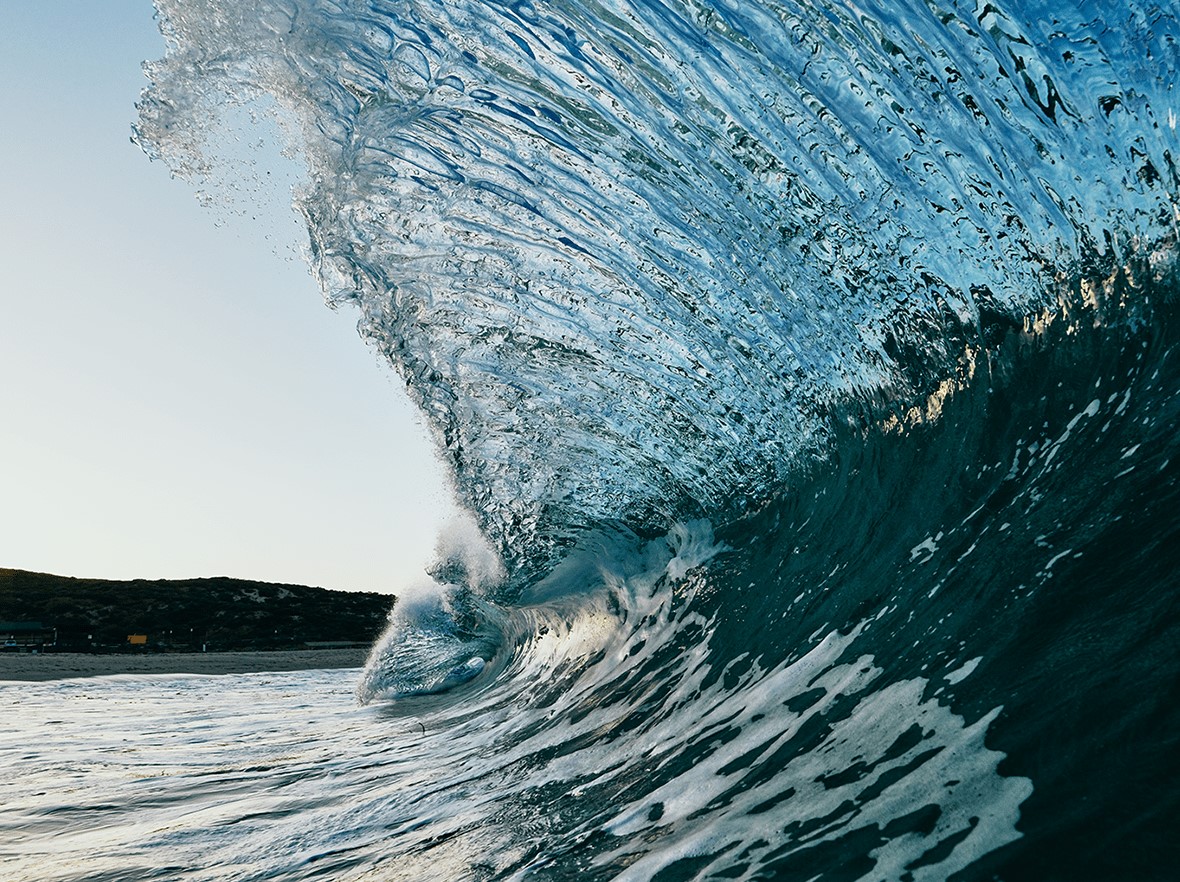
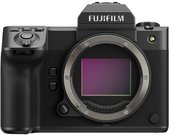
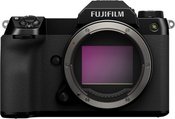
Fujifilm GFX100S II body. 102-megapixel large format sensor for outstanding image quality; High-speed performance and powerful image stabilization for complete control; All wrapped up in the lightest GFX System camera to date; Offering an immersive large format photography experience, FUJIFILM GFX100S II does not simply make images, it creates vivid memories of your favorite places in breathtaking detail.
RECORD SCENES WITH UNPARALLELED IMAGE QUALITY
The newly-developed large format sensor and latest imaging engine boost image quality and speed compared to the original GFX100S. Add powerful image stabilization into the camera’s compact body and it makes Fujifilm GFX100S II the ultimate photographic tool.
TELL YOUR STORY IN VIVID DETAIL
Offering more than full frame, the large format GFX 102MP CMOS II sensor measures 55mm diagonally and records subjects in 102-megapixel detail for stunning depth, texture, and tonality. This is coupled with the high-performance X-Processor 5 imaging engine, which rapidly processes and optimizes vast amounts of data from the sensor. Combined, they create an intuitive image-making experience even for those using a large format camera for the first time.
ISO 80 STANDARD SENSITIVITY
By improving the pixel structure on the new sensor, standard sensitivity has been extended to ISO 80. Now, photographers can make 16-bit images with wider dynamic range and lower noise than ever before.
FILM SIMULATION MODES
For the past 90 years, Fujifilm has worked tirelessly on color research. This vast expertise is harnessed in its unique Film Simulation modes. Fujifilm GFX100S II features 20 such modes, including the latest REALA ACE, providing a wide variety of creative looks.
PIXEL SHIFT MULTI-SHOT
Fujifilm GFX100S II is equipped with Pixel Shift Multi-Shot, which uses the in-body image stabilization system to precisely shift the sensor by 0.5 pixels for each shot while recording 16 consecutive RAW images. The images are then processed using the dedicated Pixel Shift Combiner software to generate a single 400-megapixel image. Additionally, Real Color mode records four RAW files with a one-pixel shift between each frame. With this function, it is possible to create 102-megapixel images with suppressed false colors, using only a quarter of the time and data of the previous GFX100S model.
GRAIN EFFECT, SMOOTH SKIN EFFECT AND OTHER EFFECTS
Fujifilm GFX100S II renders more realistic colors on highly saturated scenes by producing deeper tones. Perfect for vibrant subjects including flowers and bright landscapes. Grain Effect: Gives a film-like aesthetic to images by adding a natural, grainy look to the whole frame. Smooth Skin Effect: Ideal for portraiture, this function smooths skin texture for a more flattering complexion. HEIF Image Format Support: Fujifilm GFX100S II supports the HEIF format, a 10-bit image file with over a billion colors. It delivers high image quality, but uses up to 30% less space than a JPEG. Clarity: Lets you decide whether to depict a scene with crisp sharpness or with a soft feel. With 11 levels of control, it’s easy to fine-tune to your own personal taste and style. White Balance Shift: For white balance, choose Auto, Custom, Color Temperature, or a series of preset options. White balance can be fine-tuned in the WB Shift feature with red (R) and blue (B) color coordinates.
NEVER MISS A MOMENT
Large format cameras often provide high image quality, but low practicality when photographing moving subjects. Fujifilm GFX100S II excels in both fields. It records fleeting moments in ultra high quality so you never miss the perfect image.
UPDATED AF ALGORITHM
Thanks to an improved predictive AF algorithm, Fujifilm GFX100S II delivers enhanced subject tracking and improved AF accuracy in low-contrast environments, compared to its predecessor, the GFX100S. This means it can accurately track a wide range of subjects, including dynamic portraits, sports, and wildlife.
SUBJECT DETECTION AF
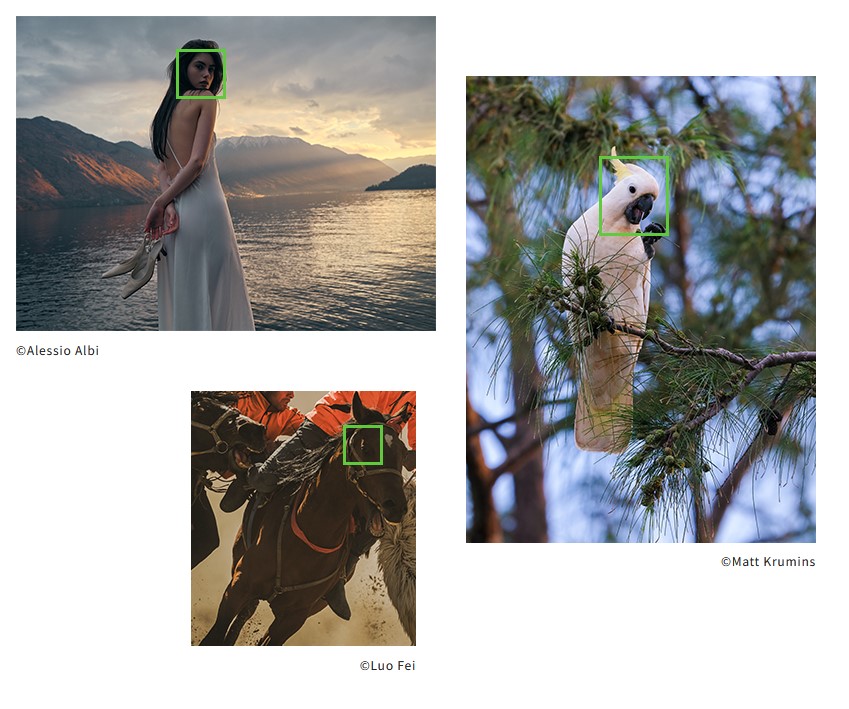
Fujifilm GFX100S II’s AF algorithm boosts face and eye detection, leaving photographers the freedom to concentrate on composition and timing. GFX100S II is also equipped with subject detection AF based on deep-learning AI technology. It can detect and focus on various subjects including animals, birds, cars, motorcycles, bicycles, airplanes, trains, insects*, and drones* using artificial intelligence. * Set SUBJECT DETECTION SETTING to BIRD to detect insects and AIRPLANE to detect drones.
7FPS HIGH-SPEED BURST
Thanks to the newly developed GFX 102MP CMOS II sensor and improved readout speed enabled by the new shutter unit, GFX100S II achieves a continuous burst speed of up to 7.0 frames-per-second*. *When mechanical shutter is selected.
HIGH-MAGNIFICATION AND HIGH-RESOLUTION EVF
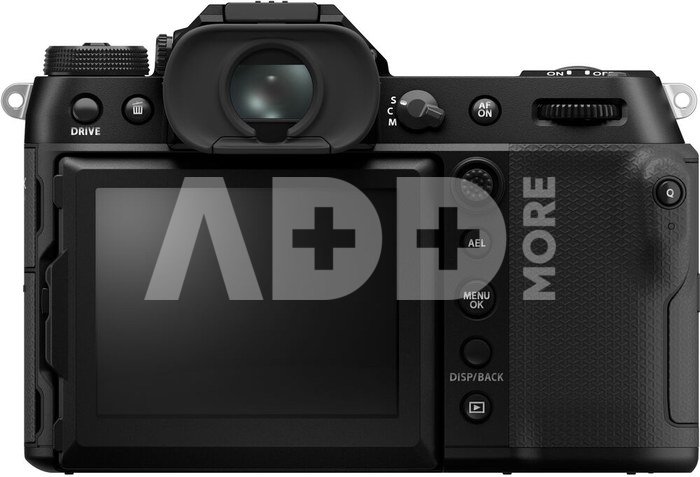
Featuring a resolution of 5.76 million dots and a magnification of 0.84x, the electronic viewfinder on Fujifilm GFX100S II offers high visibility.
ZONE CUSTOM SETTING
Setting the AF mode to Zone allows customization of the focus area according to the subject’s shape and movement.
ULTIMATE FREEDOM
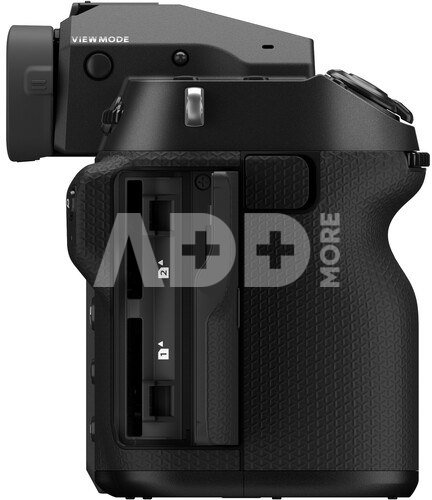
Fujifilm GFX100S II features the highest level of 5-axis image stabilization with a benefit of up to 8.0 stops* for virtually limitless large format creativity, delivering exceptional image quality even in challenging low-light scenarios. Yet despite all the performance upgrades from the GFX100S, the weight of GFX100S II has been reduced compared to its predecessor. At 883g (1.95lbs)**, it is the lightest 102-megapixel body in Fujifilm’s GFX System. * Compliant with CIPA in pitch / yaw directions when mounted with the FUJINON GF63mmF2.8 R WR lens. ** With battery and memory card installed.
THE LIGHTEST GFX SYSTEM CAMERA YET
At 883 g, the body weight has been reduced compared to GFX100S, despite numerous feature upgrades such as the powerful in-body image stabilization system. Whether you want to photograph landscapes, portraits or travel images, it has never been easier to carry a 102-megapixel sensor for ultimate image quality.
NEW LEATHER PATTERN BISHAMON-TEX™
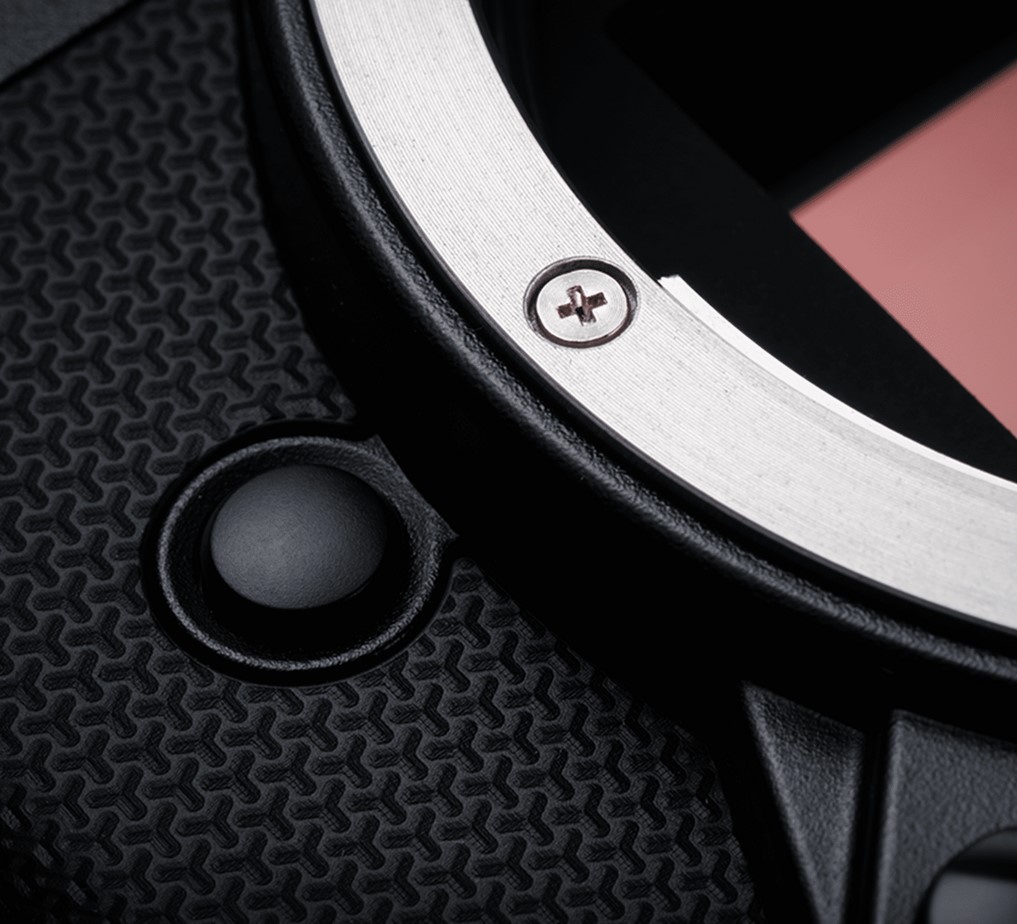
The body of Fujifilm GFX100S II is coated in BISHAMON-TEX™, which is also used on the flagship GFX100 II. The three-arrow pattern, inspired by traditional Japanese design, not only enhances the look of the camera, but also serves to ensure a steady hold.
COMFORTABLE, STEADY GRIP
The ergonomic grip is coated with BISHAMON-TEX™ to ensure a comfortable fit and assured hold. Combined with the camera’s best-in-class image stabilization, it provides reassuring support for handheld image making.
SUB LCD MONITOR
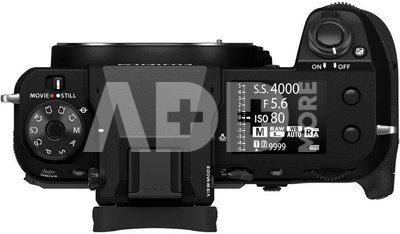
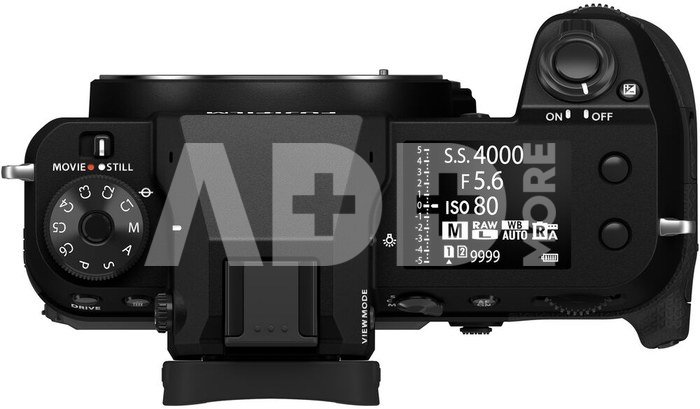
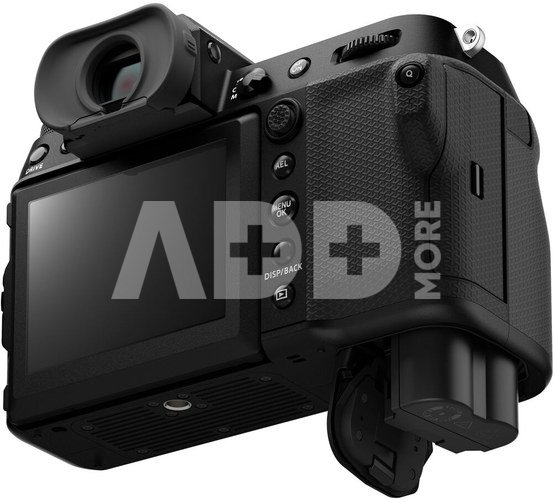
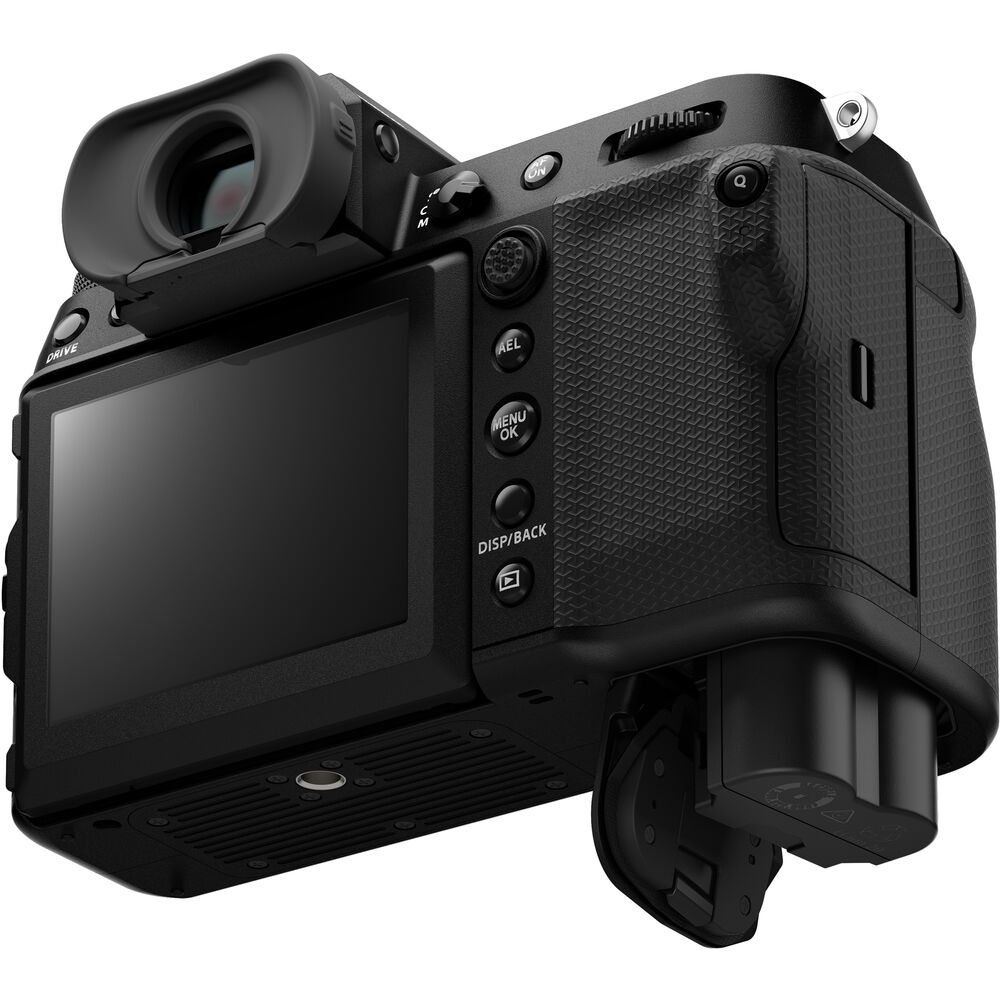
Fujifilm GFX100S II features a high-visibility 1.8-inch monochrome sub LCD monitor displaying essential information including shutter speed, aperture, ISO sensitivity, and exposure compensation. It also shows the remaining number of still images and recording time for video. The monitor can be customized to personal preferences.
MORE COLORS ON DISPLAY
Fujifilm GFX100S II is perfect for video as well as stills. Thanks to the improved pixel structure on the newly developed GFX 102MP CMOS II sensor, ISO 100 is now standard sensitivity, plus the camera offers wider dynamic range and lower noise compared to previous GFX System models. Autofocus and handling are also improved compared to the GFX100S. Just as with stills, movies will show stunning depth, tone, and detail.
SPECIFICATIONS
Model Name: FUJIFILM GFX100S II
Lens Mount: FUJIFILM G mount
Image Sensor: 43.8mm×32.9mm GFX 102MP CMOS II with primary color filter
Number of effective pixels: 102 million pixels
Sensor Cleaning System: Ultra Sonic Vibration
Image Processing Engine: X-Processor 5
Sensor Cleaning System: Ultra Sonic Vibration
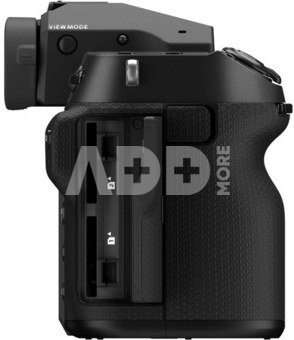
Storage media: SD Card (-2GB), SDHC Card (-32GB), SDXC Card (-2TB), UHS-I, UHS-II, Video Speed Class V90, SSD (-2TB); *Please see the Fujifilm website (https://fujifilm-x.com/support/compatibility/cameras/) to check memory card compatibility.
File format of still image: DCF - Compliant with Design rule for Camera File system (DCF2.0); JPEG - Exif Ver.2.32; HEIF - 4:2:2 10bit; RAW - 14bit / 16bit RAW (RAF original format); TIFF - 8bit / 16bit RGB (In-camera Raw Conversion Only); Notes: *Exif 2.32 is a digital camera file format that contains a variety of shooting information for optimal printing
ISO sensitivity: Still Image - Standard Output: AUTO1, AUTO2, AUTO3, ISO80~12800 (1/3 step); Extended Output: ISO40, ISO25600, ISO51200, ISO102400. Movie - Standard Output: AUTO, ISO100~12800 (1/3 step); Extended Output: ISO25600
Exposure control: TTL 256-zone metering, Multi, Spot, Average, Center Weighted
Exposure mode: P (Program AE), A (Aperture Priority AE), S (Shutter Speed Priority AE), M (Manual Exposure)
Exposure compensation: Still -5.0EV~+5.0EV 1/3EV step; Movie -2.0EV~+2.0EV 1/3EV step
Shutter type: Focal Plane Shutter
Shutter speed: Mechanical shutter - P mode: 30sec. to 1/4000sec., A mode: 30sec. to 1/4000sec., S/M mode: 60min. to 1/4000sec., Bulb: up to 60min.; Electronic shutter - P mode: 30sec. to 1/16000sec., A mode: 30sec. to 1/16000sec., S/M mode: 60min. to 1/16000sec., Bulb; up to 60min.. Notes: *The Electronic Shutter may not be suitable for fast-moving objects or handheld shooting. Flash can not be used. Mechanical + Electronic shutter - P mode; 30sec. to 1/16000sec., A mode: 30sec. to 1/16000sec., S/M mode: 60min. to 1/16000sec., Bulb: up to 60min. Notes: *Mechanical shutter works until 1/4000sec.; *The Electronic Shutter may not be suitable for fast-moving objects or handheld shooting. Flash can not be used.; E-front + Mechanical shutter - P mode: 30sec. to 1/4000sec.; E-front + Mechanical + Electronic shutter - P mode: 30sec. to 1/16000sec. Movie - 4K/DCI4K: 1/4000sec. to 1/8 sec.; FHD: 1/4000sec. to 1/8 sec.; Notes: *Cannot choose slower shutter speed than framerate for some settings. Synchronized shutter speed for flash - Mechanical shutter: 1/125sec. or slower.
Focus Mode: Single AF, Continuous AF, MF
Focus Type: Intelligent Hybrid AF (TTL contrast AF / TTL phase detection AF)
Flash: Shoe mount flash: Sync. Mode - 1st Curtain, 2nd Curtain, AUTO FP (HSS); Flash Mode - TTL (TTL AUTO / STANDARD / SLOW SYNC. ), MANUAL, MULTI *When EF-X500 is set OFF. Synchronized terminal: Sync. Mode - 1st Curtain, 2nd Curtain; Flash Mode: MANUAL
Hot shoe: Yes (Dedicated TTL Flash compatible)
Viewfinder: EVF, 0.5 inch OLED Color Viewfinder, Approx. 5.76 million dots
LCD monitor: 3.2 inch Tilt-Type (Three Direction) Touch Screen Color LCD Monitor; Aspect Ratio: 4:3; Dots: Approx. 2.36 million dots
Self-timer: Still: 10 sec., 2 sec.; Movie: 10 sec., 5 sec., 3 sec.
Digital interface: USB Type-C (USB3.2 Gen2x1)
HDMI output: HDMI Micro connector (Type D)
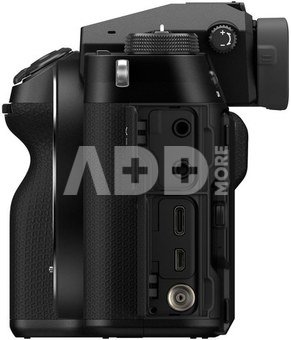
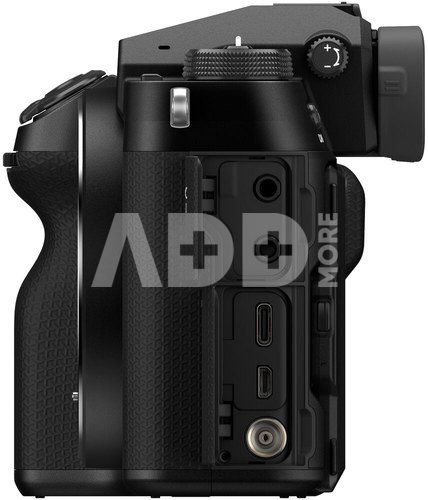
Other interfaces: ø3.5mm, stereo mini connector (Microphone), ø3.5mm, stereo mini connector (Headphone), ø2.5mm, Remote Release Connector, Hot shoe, Synchronized terminal
Power supply: NP-W235 Li-ion battery
Dimensions: Width 150.0 mm, Height 104.2 mm, Depth 87.2 mm, Minimum Depth 44.0mm.
Weight: including battery and memory card - approx. 883 g, excluding battery and memory card - approx. 802 g
Operating Temperature: -10℃~+40℃
Delivery time5-19 w.d.
Lens mount (bayonet)
Fujifilm G mount
Effective pixels
102 mln. pixels
Discuss with a consultant in Kaunas
We don't haveKlaipėdaAddress: Birželio 23-iosios g. 23gWorking hours: I-V 09:00 - 18:00VI-VII not workingPhone: +370 674 59488
Discuss with a consultant in Klaipėda
We don't haveKlaipėdaAddress: Taikos pr. 17Working hours: I-V 10:00 - 19:00VI 10:00 - 14:00VII not workingPhone: +370 604 43972
Specification
Producer(?)
Link to the official manufacturer website
Fujifilm
Delivery time
5-19 w.d.
Lens mount (bayonet)
Fujifilm G mount
Vaizdo sensorius
Image Sensor Size
Effective pixels
102 mln. pixels
Sensor type
CPU Type
X-Processor 5
Nuotrauka
ISO rating
Still Image - Standard Output: AUTO1, AUTO2, AUTO3, ISO80~12800 (1/3 step); Extended Output: ISO40, ISO25600, ISO51200, ISO102400. Movie - Standard Output: AUTO, ISO100~12800 (1/3 step); Extended Output: ISO25600
1. What are the main advantages and features that distinguish medium format cameras?
Medium format cameras stand out due to their larger sensor size compared to DSLR and mirrorless cameras, offering a greater dynamic range and superior image quality, especially in low-light conditions. They capture more detail and produce less noise at higher ISO sensitivity. Additionally, medium format camera lenses are larger, allowing for enhanced control over bokeh effects and creating a distinctive aesthetic. These cameras are commonly used for portraits, landscapes, and professional commercial photography, where quality, detail, and color fidelity are crucial. However, medium format cameras are more expensive, larger, and heavier than other camera formats, making them a choice for photographers seeking the highest quality results.
2. How to choose the right lens for a medium format camera?
Selecting the right lens for a medium format camera is a crucial step in achieving top-quality images, depending on your photography style and needs. Medium format lenses come in various types, including prime, zoom, and wide-angle lenses. Prime lenses with fixed focal lengths are ideal for portraits, as they often deliver high-quality images and excellent bokeh effects, emphasizing the subject against the background. Zoom lenses are suitable for capturing distant subjects, while wide-angle lenses are perfect for landscapes or spacious scenes. Most professional photographers opt for high-quality prime lenses for portraits and fast zoom lenses with low aperture numbers. The latter helps create beautiful background blur (bokeh) and isolate the main subject from the background. Before choosing a lens, assess your needs and what you aim to achieve in specific photography situations to ensure the best results.
The website uses cookies, which help you ensure quality of service. Continuing browsing, you agree with fotoaparatas.eu cookies policy.Agree






















Reviews
0 average rating (0 votes)