DescriptionSigma 35MM F1.4 DG II ART L-MOUNT description
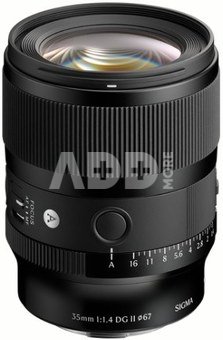
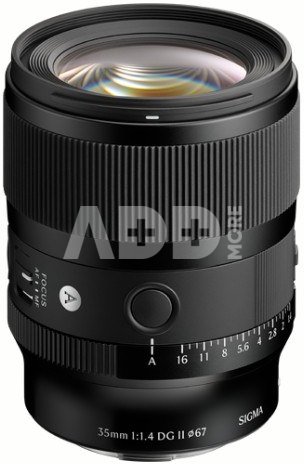
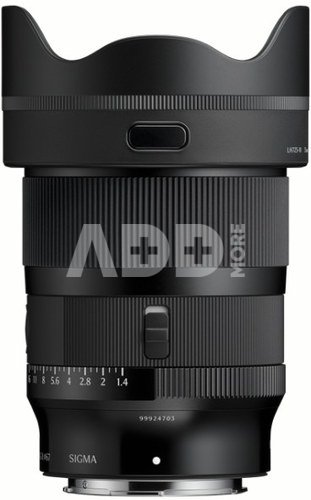
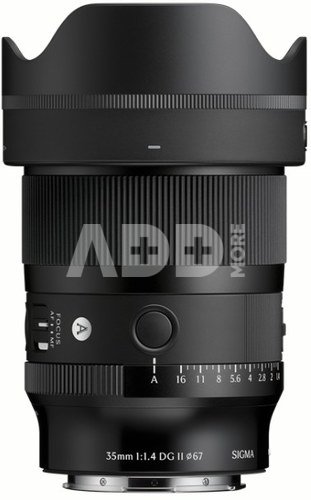
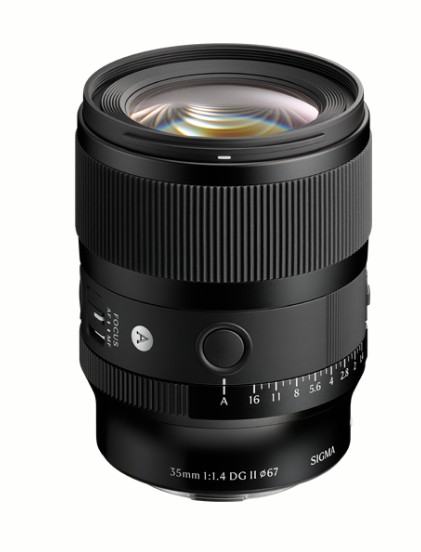
Sigma 35MM F1.4 DG II ART L-MOUNT - Built on Sigma’s latest optaical design technology, the completely redesigned 15-element, 12-group construction delivers extraordinarily detailed rendering that surpasses previous generations of 35mm F1.4 Art line lenses. By incorporating new glass materials that were previously difficult to process, together with four high-precision aspherical elements and two SLD glass elements, the lens thoroughly suppresses aberrations, particularly axial chromatic aberration, which is often prominent in large-aperture lenses. Sigma’s rigorous Art line standards ensure outstanding resolution across the entire frame, even at maximum aperture.
RICH AND BEAUTIFUL BOKEH WITHOUT COLOR BLEEDING
By thoroughly correcting axial chromatic aberration, the lens suppresses color fringing not only in the in-focus plane but also in out-of-focus areas, producing beautifully natural bokeh. The lens features an 11-blade rounded diaphragm, which maintains a round shape even when stopping down from maximum aperture. In addition, by refining the surface accuracy of the aspherical elements to the highest level, the lens enables smooth and beautifully round bokeh.
NEWLY DEVELOPED AAC (ADVANCED AMORPHOUS COATING)
The newly developed AAC (Advanced Amorphous Coating) features a low-refractive-index amorphous layer that dramatically reduces reflections responsible for ghosting and flare, delivering exceptionally clear, high-contrast image quality.
A REFINED COMPACT AND LIGHTWEIGHT DESIGN
Pursuing uncompromising compactness and lightness. By adopting a floating focus system, the lens achieves both enhanced optical performance and a more compact, lightweight design. Compared to the previous model - the Sigma 35mm F1.4 DG DN Art , it is approximately 14% shorter and 20% lighter. The mechanical design incorporates numerous space-saving innovations down to the smallest details, ensuring truly uncompromising compactness and portability. This agility empowers photographers to pursue their creative vision.
FAST AND QUIET AUTOFOCUSING WITH DUAL HLA SYSTEM
The lens employs Sigma’s dual HLA (High-response Linear Actuator) system, which drives its large and heavy focus group with high power and speed. Even as a large-aperture lens where the focus group tends to become heavier, it delivers fast, accurate, and quiet AF for both stills and video - ensuring that the user can capture decisive moments reliably.
A LONG-LASTING, RELIABLE TOOL FOR PHOTOGRAPHIC EXPRESSION
By assembling high-precision parts made of aluminum, TSC*, and other materials, the lens achieves the high level of rigidity, durability, and build quality expected of the Art line without compromising portability. As a photographic tool, it offers
the reliability needed for long-term use. (* TSC (Thermally Stable Composite) is a type of polycarbonate with a thermal expansion rate similar to that of aluminum. It has a high affinity to metal parts, which contributes to high quality product manufacturing.).
VARIOUS SHOOTING ASSIST FUNCTIONS
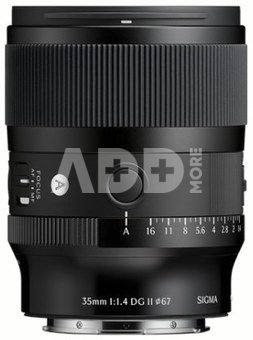
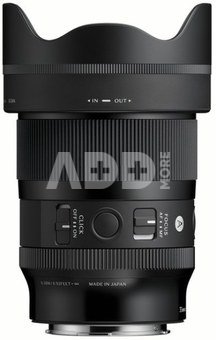
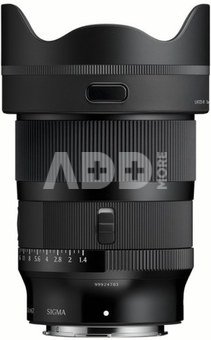
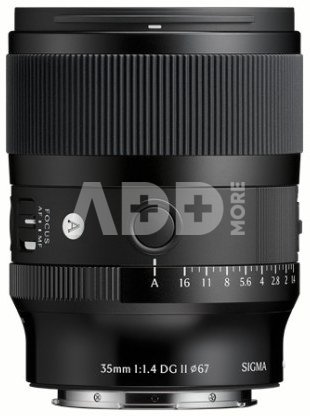
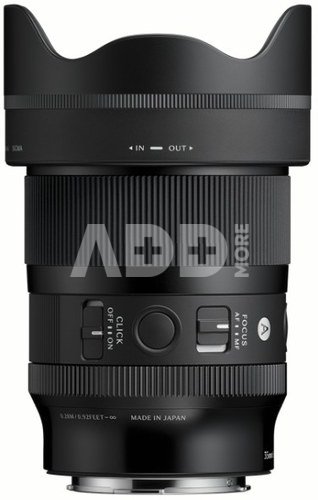
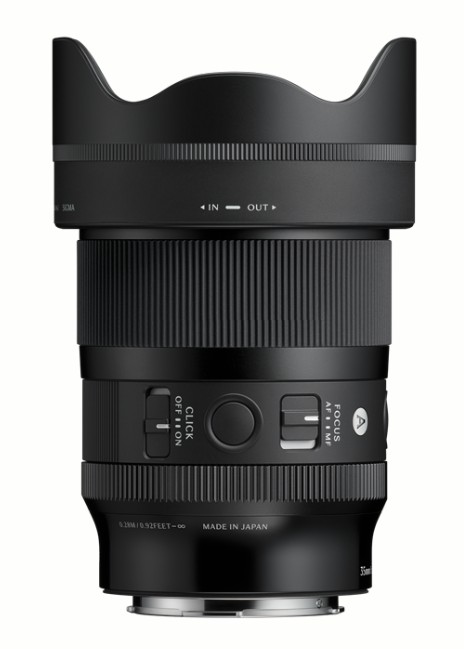
The lens is equipped with an AFL button in two locations, which can be assigned to a range of functions via the menu on selected cameras. In addition to the aperture ring, the lens is equipped with an aperture ring lock switch* and a click
switch to turn the click on and off. (* If you turn it on in position A, the aperture ring will be locked in position A. If you turn it on in a position other than A, it will be locked in the range from open to minimum aperture, and it will not be possible to turn it to position A.).
DESIGNED TO MINIMIZE FOCUS BREATHING
Optimization of the focus group arrangement and aspherical shape significantly suppresses focus breathing. The change in angle of view due to focus shift is minimized, creating a natural-looking focus shift when recording video.
DUST- AND SPLASH-RESISTANT STRUCTURE* AND WATER- AND OIL-REPELLENT COATING
In addition to a dust- and splash-resistant structure, the frontmost surface of the lens has a water- and oil-repellent coating applied, so that the lens can be used safely even in harsh outdoor environments. (*The product is designed to be dust- and splash-resistant but is not waterproof. When using the lens near water, etc., take care not to allow large amounts of water to splash on it. If water gets inside the lens, it may cause a major malfunction and render the lens unrepairable.
PETAL-TYPE HOOD WITH LOCKING MECHANISM
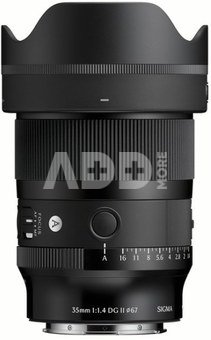
The Sigma 35mm F1.4 DG II Art comes with a dedicated petal-type hood that shields the front element from stray light to reduce the chances of unwanted flare. The hood attaches securely to the lens with a locking mechanism.
SPECIFICATIONS
Lens Mount: L-Mount
Focal length: 35 mm
Sensor Format: Full-frame [DG]
Lens Construction: 15 elements in 12 groups (2 SLD, 4 aspherical elements)
Angle of View: 63.4°
Number of Diaphragm Blades: 11 (rounded diaphragm)
Maximum Aperture: F1.4
Minimum Aperture: F16
Minimum Focusing Distance: 28 cm
Maximum Magnification Ratio: 1:5.4
Filter Size: φ67mm
Dimensions (Diameter × Length): φ73.0mm x 94.0mm. *The length of a lens is measured from the front of the lens to its mount.
Weight: 530 g
Supplied Accessories: pouch, lens hood LH725-01, front cap LCF-67 IV, rear cap LCR III
Lens mount (bayonet)
L-mount
Typ of SensorFull frame [DG]
Max Aperture
1.4 F
Discuss with a consultant in Kaunas
We don't haveKlaipėdaAddress: Birželio 23-iosios g. 23gWorking hours: I-V 09:00 - 18:00VI-VII not workingPhone: +370 674 59488
Discuss with a consultant in Klaipėda
We don't haveKlaipėdaAddress: Taikos pr. 17Working hours: I-V 10:00 - 19:00VI 10:00 - 14:00VII not workingPhone: +370 604 43972
1. How to choose the right lens for a mirrorless camera?
When choosing the right lens for a mirrorless camera, it is important to consider your photography needs and style. First, decide on the resolution and focusing distance you require. For portraits, lenses with a wide aperture, such as a 50mm f/1.8, are often preferred. If you enjoy landscapes, go for a wide-angle lens (e.g., 24mm). To capture distant objects, telephoto lenses (e.g., 70-200mm) are useful. Another important factor is the lens’s light-gathering ability, which affects performance in low-light conditions. A stabilization system can also be important, especially for longer lenses. It’s important to evaluate the build quality of the lens and the manufacturer's reputation. Try out several lenses and consider your future needs to choose the right and long-lasting investment in your photography.
2. Are all lenses compatible with all mirrorless cameras?
Not all lenses are universal for all mirrorless cameras. Different manufacturers may have different mounts, so it is important to check the lens compatibility with your camera. For example, lenses for Canon, Nikon, Sony, and other manufacturers' mirrorless cameras may not be interchangeable without adapters. It is also important to consider the sensor size. APS-C lenses may be disproportionately large for full-frame cameras. Before purchasing a lens, it is advisable to check the manufacturer's compatibility chart and consider the specific requirements of your camera. Adapters can allow the use of third-party lenses, but there may be some loss in functionality or quality.
The website uses cookies, which help you ensure quality of service. Continuing browsing, you agree with fotoaparatas.eu cookies policy.Agree


















Reviews
0 average rating (0 votes)