DescriptionSigma 135MM f/1.4 DG ART SONY E description
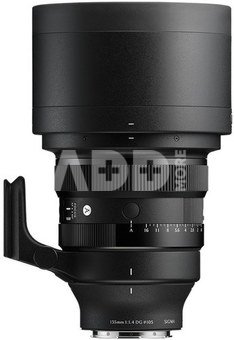
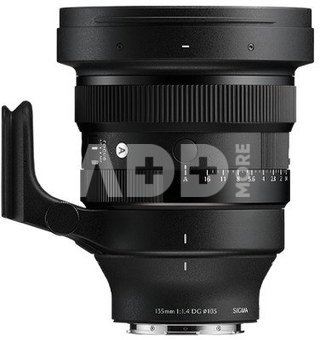
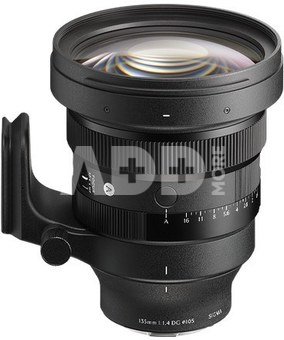
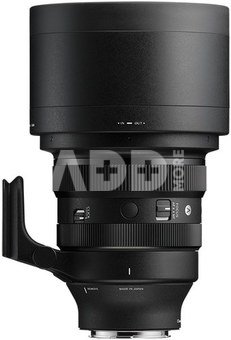
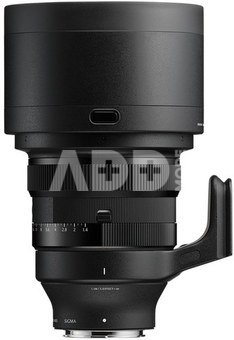
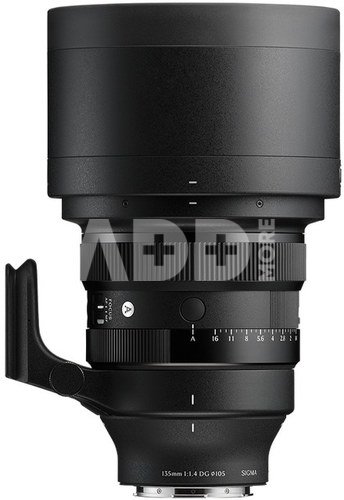
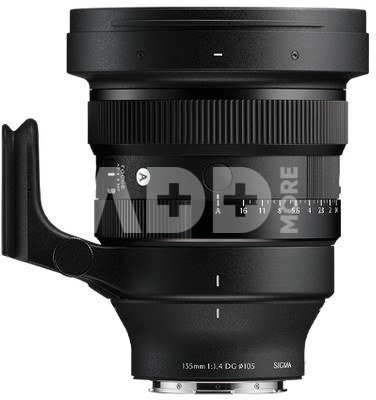
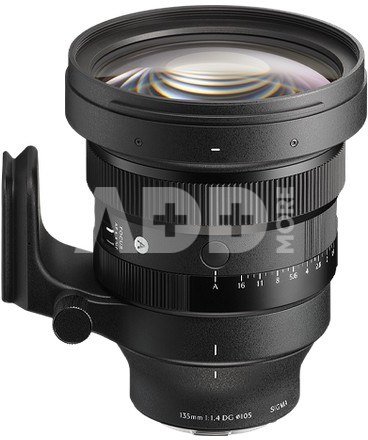
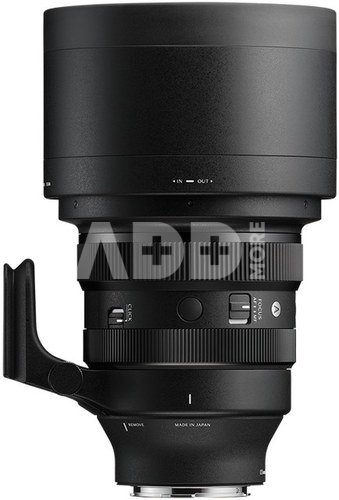
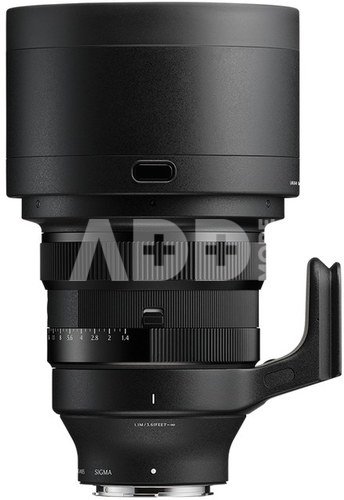
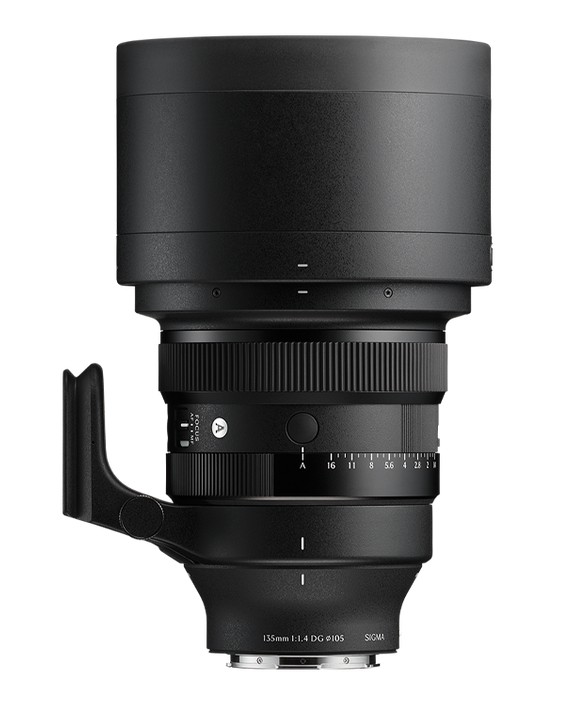
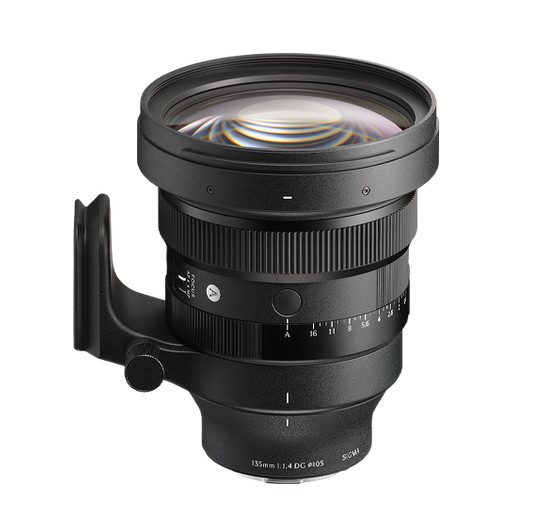
Sigma 135MM f/1.4 DG ART SONY E - revolutionizing portraits with the world’s first*1 AF 135mm F1.4. (*1 As of September 2025, by Sigma.). The Sigma 135mm F1.4 DG Art is the world’s first 135mm autofocus lens to achieve a maximum aperture of F1.4, delivering exceptional expressive capabilities for portrait photography. Its unrivaled large bokeh and stunning resolution that renders every detail create an extraordinary sense of depth and dimensionality. The natural perspective and moderate shooting distance unique to 135mm, combined with the rich bokeh of the bright F1.4 aperture, make the subject stand out and render on an entirely different level compared to conventional 135mm F1.8 lenses. Built on extensive expertise gained from developing numerous F1.4 prime lenses, this new 135mm lens from Sigma sets a new standard in portrait photography.
UNMATCHED LARGE BOKEH OPENS UP NEW EXPRESSIVE POSSIBILITIES
The most notable feature of the Sigma 135mm F1.4 DG Art is its extremely large bokeh. The effective aperture diameter*1 of the 135mm F1.4 lens produces exceptional bokeh, which is larger than that of the Sigma 105mm F1.4 DG HSM Art known as “Bokeh Master,” and is comparable to that of the Sigma 200mm F2 DG OS Sports. The natural perspective unique to 135mm, together with its overwhelming bokeh, highlights the subject and creates dimensional portraits achievable only with this lens. *1 The effective aperture diameter is calculated by dividing the focal length by the F-number. It refers to the diameter of the light beam that forms an image at the center of the image sensor. A larger effective aperture results in a shallower depth of field and more pronounced bokeh.
OPTICAL DESIGN OPTIMIZED TO PRODUCE THE NATURAL BOKEH
Thorough correction of chromatic aberration, which is common in telephoto lenses, achieves clear bokeh without color bleeding. The design also minimizes vignetting, rendering natural, near-circular bokeh even at the edges―fully utilizing the wide-open aperture.
SIGMA'S CRAFTMANSHIP BEHIND THE BEAUTIFUL BOKEH
A 13-blade diaphragm maintains a circular bokeh shape, while exceptional precision in aspherical lens processing further enhances its smoothness. This beautiful, natural bokeh is the result of Sigma’s know-how gained through development of F1.4 prime lenses over many years and the advanced manufacturing technology cultivated at its Aizu factory.
CLEAR SUBJECT DETAIL EVEN AT MAXIMUM APERTURE
Four large FLD glass elements are positioned, along with strategically placed high-dispersion glass elements to thoroughly suppress axial chromatic aberration, which tends to be more pronounced in large-aperture telephoto lenses. As a result, the lens delivers crisp subject detail even when shot wide open, making full use of the exceptionally shallow depth of field unique to a 135mm F1.4.
FLOATING FOCUS SYSTEM FOR CONSISTENT SHARPNESS
A floating focus system moves the two focus lens groups independently, ensuring consistently high resolution across the entire focus range.
DUAL HLA FOR FAST, PRECISE AUTOFOCUS
Each of the two focus groups is driven by its own HLA (High-response Linear Actuator), forming a dual HLA system. By incorporating two distinct types of HLAs, each optimized for the movement range of a focus group, the dual HLA system ensures both the high thrust needed for large-aperture telephoto lenses and fast, precise AF performance. This allows even fleeting expressions and fast-moving subjects to be captured with exceptional reliability.
DESIGNED TO MINIMIZE FLAR AND GHOSTING
Flare and ghosting, which reduce image quality, are addressed under all conditions of incident light, based on the most advanced simulation technology and Sigma’s Super Multi-Layer Coating. High backlight resistance enables clear and sharp images under any lighting conditions.
FEATURES
- Large bokeh for powerful visual expression.
- Precision optics for exquisite portrait detail.
- Fast, accurate autofocus to capture fleeting expressions.
- A wealth of functions for professional use and excellent build quality.
SPECIFICATIONS
Lens Mount: Sony E-mount
Sensor Format: Full-frame [DG]
Lens Construction: 17 elements in 13 groups (4 FLD, 2 aspherical elements)
Angle of View: 18.2°
Number of Diaphragm Blades: 13 (Rounded Diaphragm)
Maximum Aperture: F1.4
Minimum Aperture: F16
Minimum Focusing Distance: 110 cm
Maximum Magnification Ratio: 1:6.9
Filter Size: φ105mm
Dimensions (Diameter × Length): φ111.7 mm x 137.5 mm
Weight: 1420 g
Supplied Accessories: Pouch, Lens Hood LH1126-01, Front Cap LCF-105 IV, Rear Cap LCR III, Tripod Socket TS-181, Protective Cover PT-61, Shoulder Strap
Lens mount (bayonet)
Sony E
Typ of SensorFull frame
Max Aperture
1.4 F
Discuss with a consultant in Kaunas
We don't haveKlaipėdaAddress: Birželio 23-iosios g. 23gWorking hours: I-V 09:00 - 18:00VI-VII not workingPhone: +370 674 59488
Discuss with a consultant in Klaipėda
We don't haveKlaipėdaAddress: Taikos pr. 17Working hours: I-V 10:00 - 19:00VI 10:00 - 14:00VII not workingPhone: +370 604 43972
1. How to choose the right lens for a mirrorless camera?
When choosing the right lens for a mirrorless camera, it is important to consider your photography needs and style. First, decide on the resolution and focusing distance you require. For portraits, lenses with a wide aperture, such as a 50mm f/1.8, are often preferred. If you enjoy landscapes, go for a wide-angle lens (e.g., 24mm). To capture distant objects, telephoto lenses (e.g., 70-200mm) are useful. Another important factor is the lens’s light-gathering ability, which affects performance in low-light conditions. A stabilization system can also be important, especially for longer lenses. It’s important to evaluate the build quality of the lens and the manufacturer's reputation. Try out several lenses and consider your future needs to choose the right and long-lasting investment in your photography.
2. Are all lenses compatible with all mirrorless cameras?
Not all lenses are universal for all mirrorless cameras. Different manufacturers may have different mounts, so it is important to check the lens compatibility with your camera. For example, lenses for Canon, Nikon, Sony, and other manufacturers' mirrorless cameras may not be interchangeable without adapters. It is also important to consider the sensor size. APS-C lenses may be disproportionately large for full-frame cameras. Before purchasing a lens, it is advisable to check the manufacturer's compatibility chart and consider the specific requirements of your camera. Adapters can allow the use of third-party lenses, but there may be some loss in functionality or quality.
The website uses cookies, which help you ensure quality of service. Continuing browsing, you agree with fotoaparatas.eu cookies policy.Agree


















Reviews
0 average rating (0 votes)