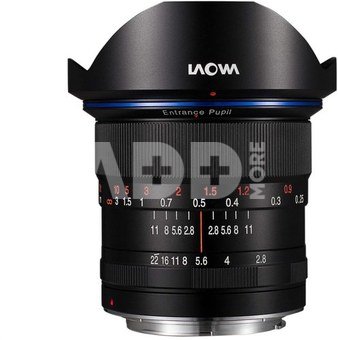
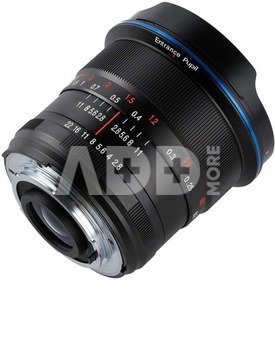
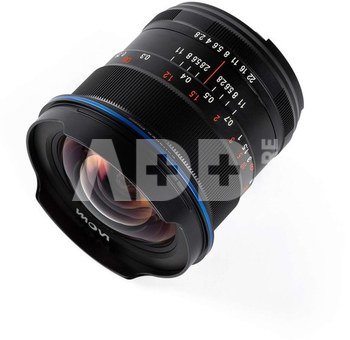
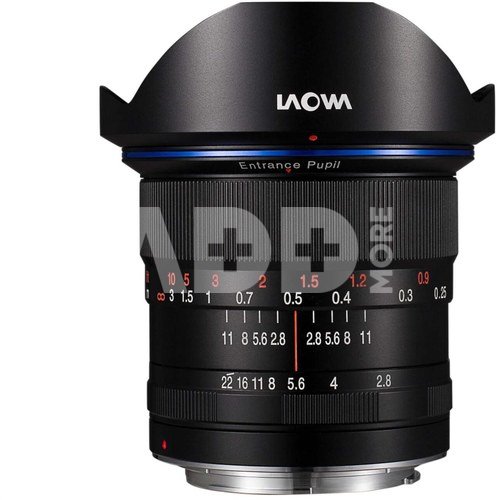
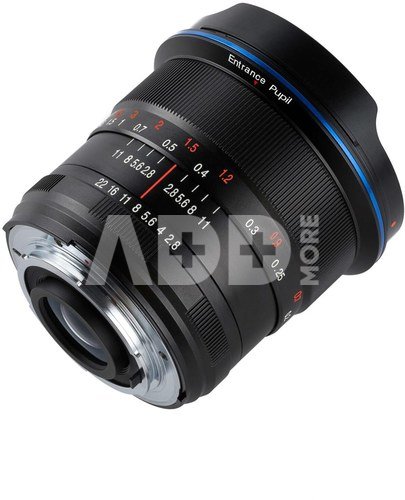
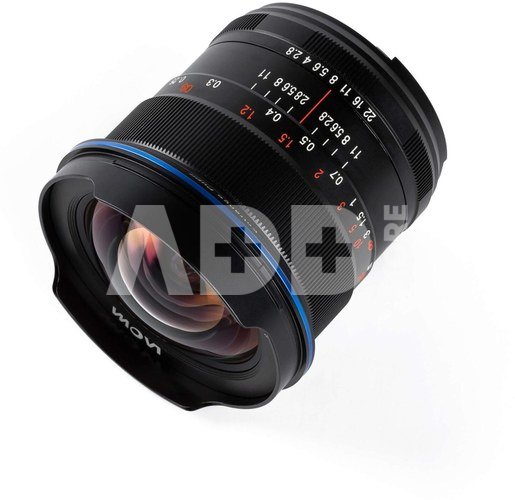
Laowa D-Dreamer 12 mm f/2,8 Zero-D for Nikon Z
Most Ultra Wide Angle lenses suffer from an optical distortion rate from 2-5% which causes straight lines to bend. LAOWA Zero-D lenses are so well corrected, they achieve a close-to-zero distortion rate that is truly amazing. If you are not so sure what distortion is, this article may help. https://photographylife.com/what-is-distortion © Steven Wu (Hong Kong) © LaoMao © Kenneth Chung * The aforementioned close-to-zero distortion rate is measured from shooting objects at infinity focus. The distortion rate may vary for shorter object distance. Only Optical Distortion (Barrel/ Pincushion/ Moustache) is covered here. The LAOWA 12mm f/2.8 Lens covers an ultra-wide 122° angle of view, allowing you to create an outstanding landscape or architectural shot not possible with lesser lenses. Shooting interior shots will also become much easier. Your house will become spacious and impactful in your photos, even if you are shooting in tight spaces. Don’t forget, this is the world’s widest rectilinear f/2.8 lens. © Nicky Bay © Gabriel Spadoni © John Hancock © Nicky Bay Optical performance is what we will never compromise. The optical design features a 16 lens elements in 10 groups with 3pcs of Extra-Low Dispersion Elements and 2pcs of Aspherical Elements. This patented optical design delivers a high resolution from corners to corners, even in wide open (f/2.8) situation. Chromatic Aberration has also been controlled to the minimal. © Zangweizai, Bihanlin, Xiaokaihuo © Steve Leung © John Hancock © John Hancock Weighing only 609g, this is an every-day carry-around lens. It is really small compared to other UWA lenses in the market. Finally, you don’t need to bring a hefty piece of glass for work and travel. And you can now attach 2 pcs of 100mm (not 150mm!!) ND filters & 1pc of 105mm CPL filter – without worrying about vignetting – with the LAOWA 100mm filter holder system. Create your best landscape photos ever! Comparison with 11-21mm f/4 L: The LAOWA 12mm f/2.8 ZERO-D is currently the fastest full-frame, non-fisheye 12mm lens in the market. Astro photographers will truly appreciate our efforts to create a fast, well corrected lens. The ultra fast aperture can effectively shorten the exposure time required and help to achieve more details of the night sky. This is proven to be the perfect tool for a nice Milky Way shot. The fast aperture is also very convenient for low-light/indoor shooting. (※ As of July 22, 2016) © Nicky Bay © Steve Leung © HongShaoJiaoYa © Johan van der Wielen Time-lapse footage shot in Alaska with our LAOWA 12mm f/2.8 ZERO-D Lens (Click 1080p for the best experience) The 122° angle of view + Close-to-zero distortion is too good to be true for panorama shooting! © Keith Cooper © Keith Cooper Find it hard to locate the entrance pupil (nodal point) for panoramic shooting? Let us help you. Not sure what it is? Check the below link for further explanation. http://www.panoramic-photo-guide.com/entrance-pupil.html Get to Specifics *Dimensions of Sony E mount lenses will be slightly longer due to the flange distance difference. Resolution You may refer to the below review by Photozone for scientific data on our lens resolution. You can also do a quick comparison of its performance against some of your favorite ultra wide angle lenses. Click to read the full review. Adapted from Photozone The LAOWA 12mm f/2.8 ZERO-D adopts a floating optical design to ensure exceptional sharpness not only at infinity, but also at close focusing distances. Along with a 18 cm minimal focusing distance and 0.2x Maximum magnification, this lens is also a fun tool for creating some mini wide angle macros. © Nicky Bay © Bastian Kratzke Bokehiiistic © Nicky Bay We would like to introduce the LAOWA Water & Dust Repelling “Frog Eye” Coating (FEC). Every LAOWA 12mm f/2.8 ZERO-D is coated with the new LAOWA “Frog Eye” Coating. It gives your lens an extra layer of protection. See below video to understand its benefits compared to traditional coatings. Name 12mm f/2.8 Zero-D Focal Length 12mm Max. Aperture f/2.8 Angle of View 121.96° Format Compatibility Full Frame Lens Structure 16 elements in 10 groups Aperture Blades 7 Min. Focusing Distance 18cm Max. Magnification 1:5 Filter Thread N/A Dimensions 75 x 83mm Weight 609g Mounts Canon EF & RF / Nikon AI & Z / Sony A / Pentax K / Sony E MTF Optical Structure
Delivery time
0-2 w.d.
Weight
609 g
Discuss with a consultant in Kaunas
We don't have
Klaipėda Address: Birželio 23-iosios g. 23g Working hours: I-V 09:00 - 18:00 VI-VII not working Phone: +370 674 59488
Try it in Klaipėda
Have
Klaipėda Address: Taikos pr. 17 Working hours: I-V 10:00 - 19:00 VI 10:00 - 14:00 VII not working Phone: +370 604 43972
1. How to choose the right lens for a mirrorless camera?
When choosing the right lens for a mirrorless camera, it is important to consider your photography needs and style. First, decide on the resolution and focusing distance you require. For portraits, lenses with a wide aperture, such as a 50mm f/1.8, are often preferred. If you enjoy landscapes, go for a wide-angle lens (e.g., 24mm). To capture distant objects, telephoto lenses (e.g., 70-200mm) are useful. Another important factor is the lens’s light-gathering ability, which affects performance in low-light conditions. A stabilization system can also be important, especially for longer lenses. It’s important to evaluate the build quality of the lens and the manufacturer's reputation. Try out several lenses and consider your future needs to choose the right and long-lasting investment in your photography.
2. Are all lenses compatible with all mirrorless cameras?
Not all lenses are universal for all mirrorless cameras. Different manufacturers may have different mounts, so it is important to check the lens compatibility with your camera. For example, lenses for Canon, Nikon, Sony, and other manufacturers' mirrorless cameras may not be interchangeable without adapters. It is also important to consider the sensor size. APS-C lenses may be disproportionately large for full-frame cameras. Before purchasing a lens, it is advisable to check the manufacturer's compatibility chart and consider the specific requirements of your camera. Adapters can allow the use of third-party lenses, but there may be some loss in functionality or quality.




![Sigma 70-200mm F2.8 DG DN OS for Sony E-Mount [Sports] + 200 € cashback](https://www.fotoaparatas.eu/data/images/catalog_pics/n_thumb/sigma-70-200mm-f2-8-dg-dn-os-for-sony-e-mount-sports.jpg "Sigma 70-200mm F2.8 DG DN OS for Sony E-Mount [Sports] + 200 € cashback")












Reviews
0 average rating (0 votes)