TAMRON 17-28MM F/2.8 DI III RXD SONY E
Companion model to the compact and popular Tamron 28-75mm F/2.8 Di III RXD
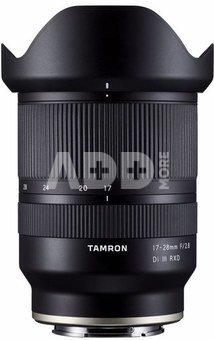
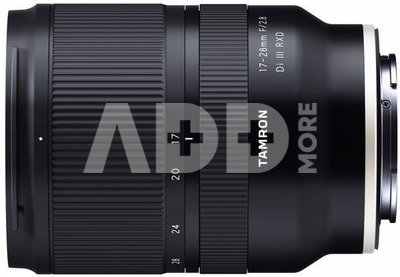
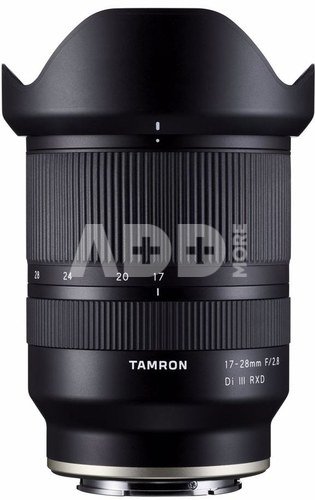
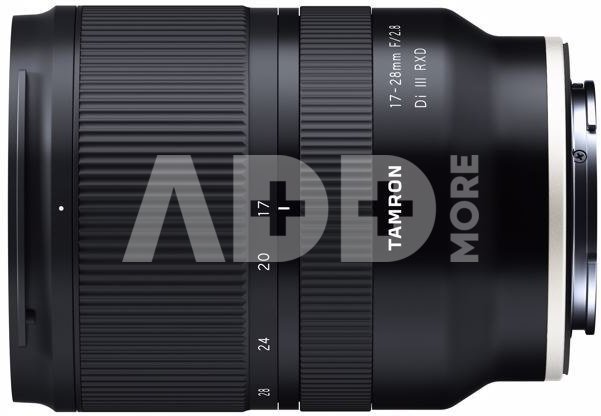
Sharing the same development concept as the highly esteemed Tamron 28-75mm F/2.8 Di III RXD that launched in May 2018, the 17-28mm zoom was designed with the top priority of high optical performance in a form factor that is light and compact. Tamron engineers have achieved an unrivalled small size (99mm / 3.9 in) and light weight (420g / 14.8 oz) for a zoom range of 17-28mm. The overall length does not change when zoomed or during focus, thereby creating stable, well balanced operation and excellent mobility. In addition, Model A046 features a filter diameter of just 67mm, very small for an ultra wide-angle zoom lens. It has the same filter size as its sister lens the Model A036 allowing the use of the same lens cap and filters. The two zooms together create an extremely compact system that covers 17 to 75mm and weighs less than 1kg (35.3 oz).
Superb high resolution performance
The 17-28mm zoom’s optical design consists of 13 lenses in 11 groups, including three aspherical lens elements, two LD (Low Dispersion) lens elements and one XLD (eXtra Low Dispersion) lens element that has properties close to those of fluorite. Together they efficiently suppress chromatic and other aberrations. Additionally, Tamron’s legendary BBAR (Broad-Brand Anti-Reflection) Coating effectively reduces ghosting and flare. Leveraging camera functions, it provides excellent optical performance matching the latest high resolution image sensors from edge-to-edge throughout the entire zoom range. The combination of compact size and light weight plus high resolution performance lets users capture a wide variety of genre including landscapes, architecture and casual snapshot photography.
Extreme close-up capability enables versatile creative expression with ultra wide-angle zoom
The 17-28mm zoom focuses close. The MOD at the 17mm wide position is 0.19m / 7.5 in (same as Model A036) and the maximum magnification ratio is 1:5.2. At the 28mm end, it achieves the maximum magnification ratio of 1:6 while reaching the MOD of 0.26m / 10.2 in This remarkable performance allows users to create compositions that emphasize perspective (the closer subject is larger and the more distant one is smaller) and that are unique to wide-angle lenses.
The RXD stepping motor unit is exceptionally quiet
The AF drive incorporates a sensor that accurately detects the position of the lens while the RXD motor unit delivers optimized AF control. This achieves very fast and accurate autofocus operation, allowing users to maintain pin-sharp focus on continually moving subjects or when filming video. The exceedingly quiet operation is an important advantage because it virtually eliminates extraneous sounds during video recording. In addition, the compact configuration of the RXD AF drive system contributes to the unprecedented size and weight reduction.
Moisture-Resistant Construction and Fluorine Coating
Environmental seals are located at the lens mount area and other critical locations to prevent infiltration of moisture and/or rain drops and afford Moisture-Resistant construction. This feature provides an additional layer of protection when shooting outdoors under adverse weather conditions. Also, the front surface of the lens element is coated with a protective fluorine compound that has excellent water- and oil-repellant qualities. The lens surface is easier to wipe clean and is less vulnerable to the damaging effects of dirt, moisture or oily fingerprints, allowing for much easier maintenance.
Typ of Sensor
Full Frame
Focal length Movie
17 mm
Image stabilization
Nėra
Discuss with a consultant in Kaunas
We don't have
Klaipėda Address: Birželio 23-iosios g. 23g Working hours: I-V 09:00 - 18:00 VI-VII not working Phone: +370 674 59488
Discuss with a consultant in Klaipėda
We don't have
Klaipėda Address: Taikos pr. 17 Working hours: I-V 10:00 - 19:00 VI 10:00 - 14:00 VII not working Phone: +370 604 43972
1. How to choose the right lens for a mirrorless camera?
When choosing the right lens for a mirrorless camera, it is important to consider your photography needs and style. First, decide on the resolution and focusing distance you require. For portraits, lenses with a wide aperture, such as a 50mm f/1.8, are often preferred. If you enjoy landscapes, go for a wide-angle lens (e.g., 24mm). To capture distant objects, telephoto lenses (e.g., 70-200mm) are useful. Another important factor is the lens’s light-gathering ability, which affects performance in low-light conditions. A stabilization system can also be important, especially for longer lenses. It’s important to evaluate the build quality of the lens and the manufacturer's reputation. Try out several lenses and consider your future needs to choose the right and long-lasting investment in your photography.
2. Are all lenses compatible with all mirrorless cameras?
Not all lenses are universal for all mirrorless cameras. Different manufacturers may have different mounts, so it is important to check the lens compatibility with your camera. For example, lenses for Canon, Nikon, Sony, and other manufacturers' mirrorless cameras may not be interchangeable without adapters. It is also important to consider the sensor size. APS-C lenses may be disproportionately large for full-frame cameras. Before purchasing a lens, it is advisable to check the manufacturer's compatibility chart and consider the specific requirements of your camera. Adapters can allow the use of third-party lenses, but there may be some loss in functionality or quality.

















Reviews
5 average rating (1 rating)