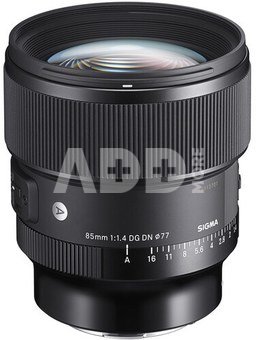
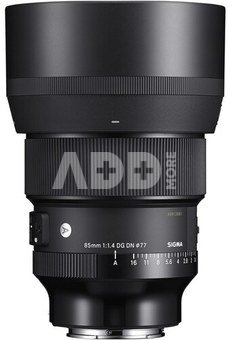
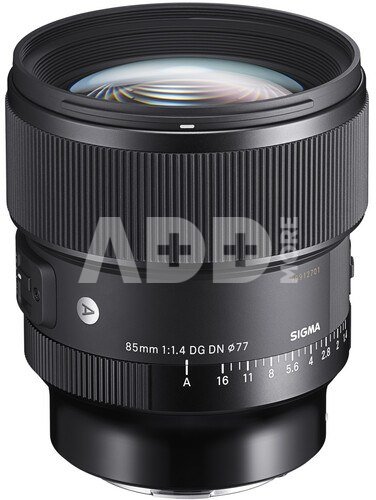
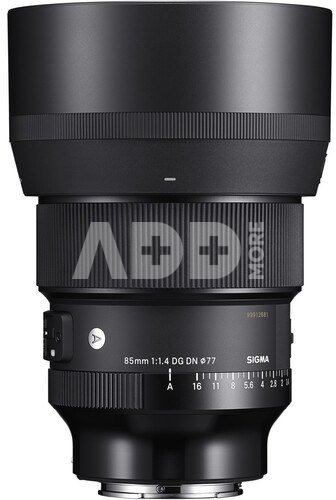
Sigma 85mm f1.4 DG DN Art (Leica L)
Mark a new chapter of the Art line f/1.4 in the mirrorless age.
The 85mm f/1.4 DG DN | Art combines a clear and delicate rendering performance, which is requisite for portrait photography, with beautiful, rich bokeh effects only possible with lenses such as a large-diameter f/1.4, at a level that will satisfy both professional and advanced amateur photographers. The focal length of 85mm and significant bokeh effect at f/1.4 brightness allow the users’ subjects to stand out in a complementary fashion, which is one of the essences of taking portrait photography, so users can enjoy it to the fullest.
The record-high performance worthy of the name of 85mm f/1.4 | Art
85mm f/1.4 is a specification almost synonymous with a portrait lens. With the Art line lenses, SIGMA pursues the highest optical performance possible and has devoted the latest optical design technologies, as well as the production technologies of the Aizu factory, SIGMA's only production site, to the development of these lenses. The result is a detailed image critical for portrait photography that is achieved at a level that will satisfy both professional and advanced amateur photographers.
Lightweight & compact
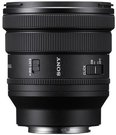
The 85mm f/1.4 DG DN | Art weighs 630g, with a filter size of 77mm and a body length of 94.1mm. Designed exclusively for mirrorless cameras, it has a “large lens diameter and superb optical performance” and “a lightweight and compact body,” a combination which has long been difficult to achieve.
A full range of functionalities and an excellent build quality
This compact lens is packed with a range of functionalities that will satisfy both professional and advanced amateur photographers. The 85mm f/1.4 DG DN | Art has newly introduced an “Iris ring lock switch.” This prevents from unintended movement of the iris ring during shooting, allowing users to devote their attention to the creation of their image. The Iris ring is mounted with a de-click function for removing clicks by the Iris Ring Click Switch, enabling seamless operations that are especially useful such as during video shooting. Furthermore, the “Focus Mode Switch” on the lens body and the “AFL button” that allows various functions to be assigned from a camera body will also assist users’ shooting.
Durable
In addition to the dust- and splash-proof structure, along with a water- and oil-repellent coating, the lens uses materials such as aluminum and TSC (Thermally Stable Composite) where they are best suited, achieving a level of build quality that is worthy of the Art line.
Typ of Sensor
Full Frame
Image stabilization
Nėra
Delivery time
0-2 w.d.
Discuss with a consultant in Kaunas
We don't have
Klaipėda Address: Birželio 23-iosios g. 23g Working hours: I-V 09:00 - 18:00 VI-VII not working Phone: +370 674 59488
Discuss with a consultant in Klaipėda
We don't have
Klaipėda Address: Taikos pr. 17 Working hours: I-V 10:00 - 19:00 VI 10:00 - 14:00 VII not working Phone: +370 604 43972
1. How to choose the right lens for a mirrorless camera?
When choosing the right lens for a mirrorless camera, it is important to consider your photography needs and style. First, decide on the resolution and focusing distance you require. For portraits, lenses with a wide aperture, such as a 50mm f/1.8, are often preferred. If you enjoy landscapes, go for a wide-angle lens (e.g., 24mm). To capture distant objects, telephoto lenses (e.g., 70-200mm) are useful. Another important factor is the lens’s light-gathering ability, which affects performance in low-light conditions. A stabilization system can also be important, especially for longer lenses. It’s important to evaluate the build quality of the lens and the manufacturer's reputation. Try out several lenses and consider your future needs to choose the right and long-lasting investment in your photography.
2. Are all lenses compatible with all mirrorless cameras?
Not all lenses are universal for all mirrorless cameras. Different manufacturers may have different mounts, so it is important to check the lens compatibility with your camera. For example, lenses for Canon, Nikon, Sony, and other manufacturers' mirrorless cameras may not be interchangeable without adapters. It is also important to consider the sensor size. APS-C lenses may be disproportionately large for full-frame cameras. Before purchasing a lens, it is advisable to check the manufacturer's compatibility chart and consider the specific requirements of your camera. Adapters can allow the use of third-party lenses, but there may be some loss in functionality or quality.

















Reviews
0 average rating (0 votes)