DescriptionSigma 10-18mm f/2.8 DC DN Contemporary CANON RF description
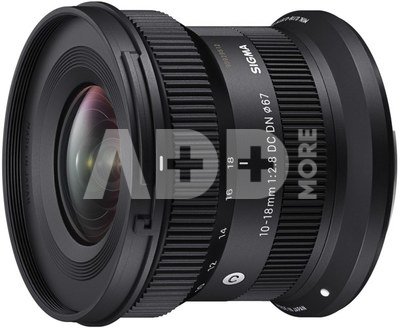
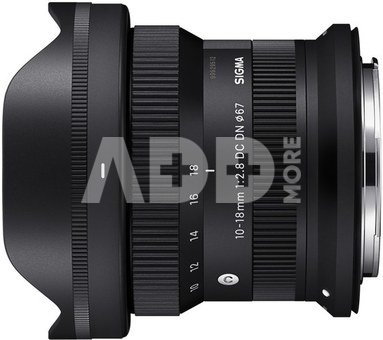
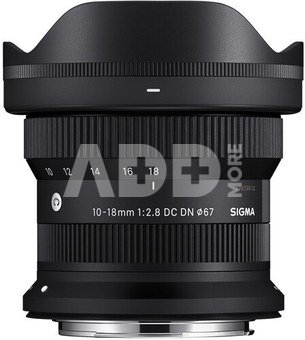
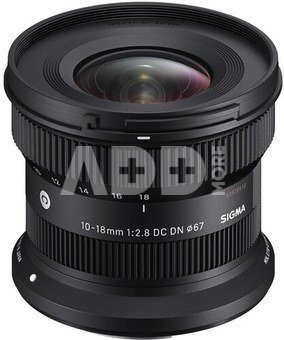
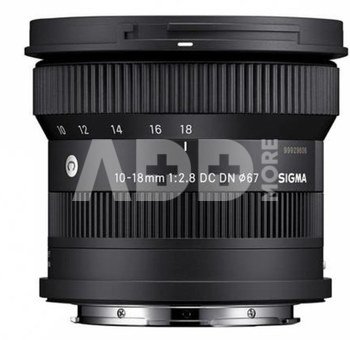
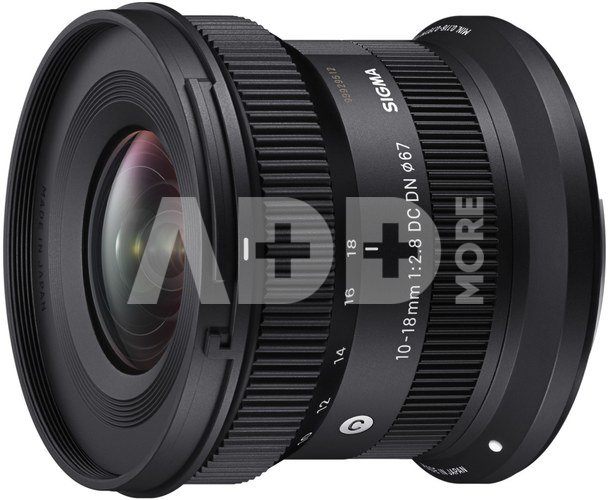
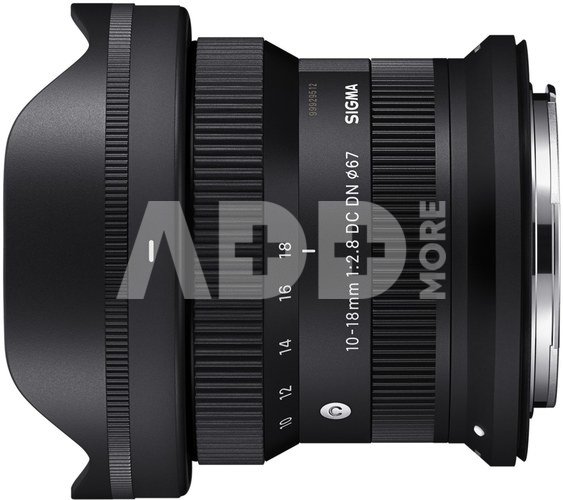
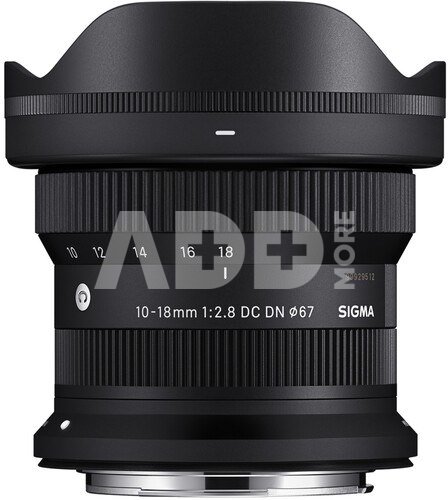
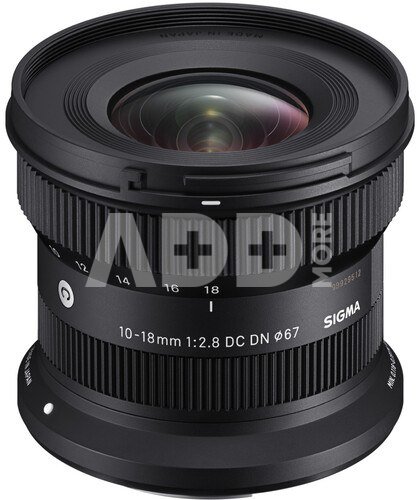
Sigma 10-18mm f/2.8 DC DN Contemporary CANON RF - SIGMA’s APS-C size mirrorless dedicated zoom lens, the SIGMA 10-18mm f/2.8 DC DN Contemporary, is now available for the Canon RF Mount. This addition allows users to enjoy high-performance, and high-quality SIGMA zoom lenses in native mount on their Canon RF Mount system even more. A control algorithm including AF drive and communication speed optimization has been developed specifically for Canon RF Mount interchangeable lenses. In addition to realizing high-speed AF, the lens also supports Servo AF and in-camera aberration correction*. The mount is rubber-sealed to cater for use in a variety of environments. *Available on supported cameras only. By utilizing unique optics which have been designed to correct lens aberrations, the Sigma 10-18mm f/2.8 DC DN Contemporary produces images that are sharp across the entire image.
EXTREMELY COMPACT AND LIGHTWEIGHT
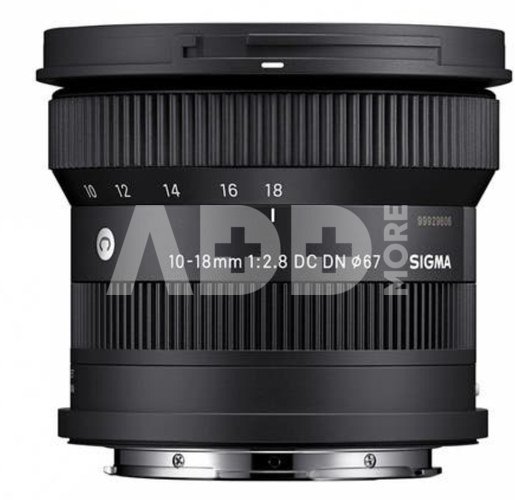
The Sigma 10-18mm f/2.8 DC DN Contemporary is the world’s smallest and lightest ultra-wide-angle zoom lens for APS-C cameras*1, with a length of 62.0 mm, a maximum diameter of ø72.2 mm, and a weight of 270 g *2. The lens can be carried around with ease or attached to an APS-C mirrorless camera and a gimbal to create an ultra-portable video setup. *1 As an AF f/2.8 zoom lens for mirrorless cameras with an APS-C sensor. As of October, 2023 by SIGMA. *2 The values are for Canon RF Mount.
IDEAL FOR LANDSCAPES, TRAVEL, VIDEO AND ONLINE CONTENT CREATION
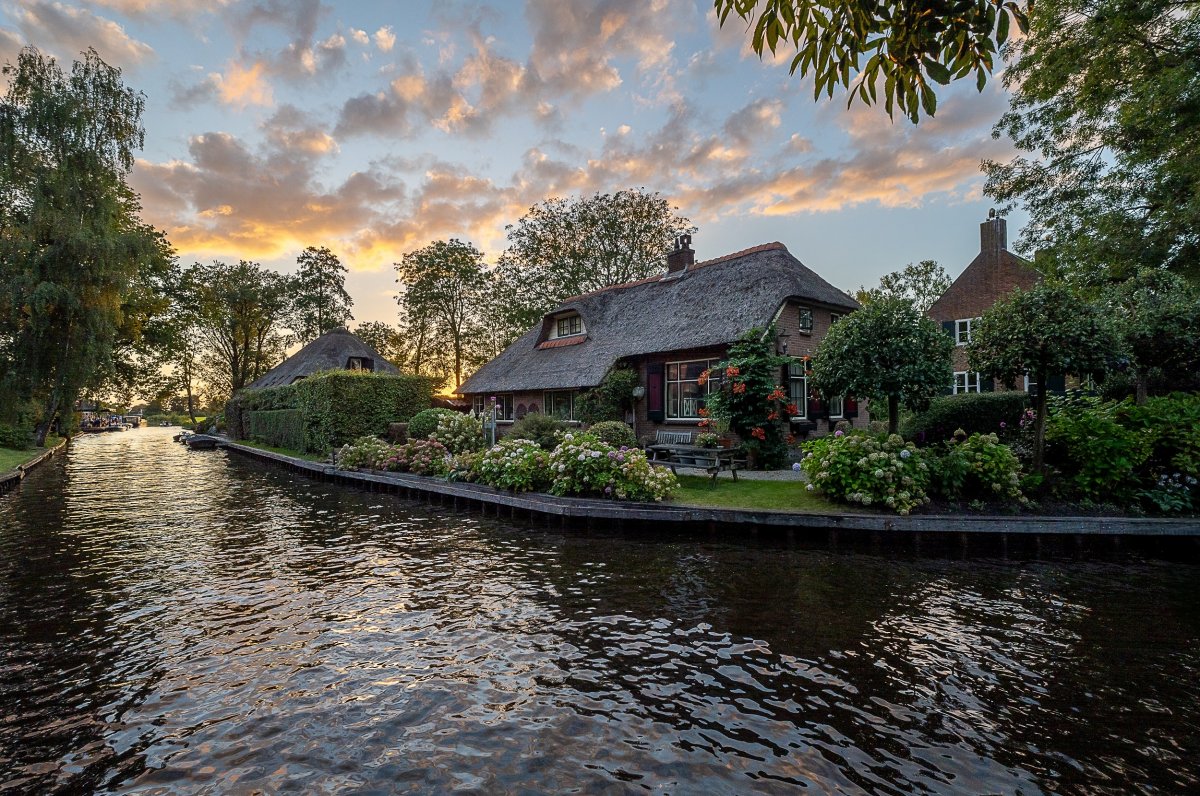
With ultra-wide focal length, portable body and razor-sharp optics, the Sigma 10-18mm f/2.8 DC DN Contemporary is the perfect portable option for landscape, travel, interior and street photography. It also boasts impressive video capability owing to its bright f/2.8 aperture, which makes it well-suited to shooting in low-light environments and creating a shallow depth-of-field. The ultra-wide angle-of-view is ideal for hand-held vlogging that requires the capture of both the subject and the environment.
COMPACT LENS
The Sigma 10-18mm f/2.8 DC DN Contemporary uses an aspherical concave lens with a large polarization ratio and high refractive index in the first group, reducing the number of elements in the first group and shortening the overall length. Additionally, a new push-on petal type hood has been developed. Thanks to the new structure with a spring and lever which is not utilized by any other manufacturer, the hood has been made both thinner and smaller, which also contributes to the overall compactness of the lens.
DESIGNED TO MINIMIZE FOCUS BREATHING
The lens has been designed to suppress focus breathing. The change in angle-of-view due to focus shift is minimized, creating a natural-looking focus shift when recording video.
SUPPORT VARIOUS CAMERA FUNCTIONS
The lens is compatible with the electronic image stabilization function, aberration correction function, DMF, and AF+MF in camera bodies from various manufacturers. The advantage using this ultra-wide-angle lens is that it provides a generous angle-of-view even when the electronic image stabilization function crops the image. *Function available on supported cameras only. Available corrections or auto correction functionality may vary depending on the camera model.
LARGE-APERTURE, ULTRA-WIDE-ANGLE ZOOM WITH EXPRESSIVE IMAGING CAPABILITIES
By utilizing unique optics which have been designed to correct lens aberrations, the Sigma 10-18mm F2.8 DC DN Contemporary produces images that are sharp across the entire image.
ASPHERICAL LENS, SPECIAL LOW DISPERSION GLASS
The use of an aspherical lens with large eccentricity and refractive index as the first lens element has enabled a lens construction with a reduced number of elements. Used in conjunction with multiple aspherical lenses and special low-dispersion glass, the lens can produce high resolution images whilst remaining compact and lightweight.
MINIMUM FOCUSING DISTANCE 11.6 CM, MAXIMUM MAGNIFICATION RATIO 1:4
Create expressive close-up images using the 11.6 cm minimum focusing distance when shooting at 10 mm. With a magnification ratio of 1:4, the lens captures unique portraits, still life and more.
FEATURES
- Inner focus system
- Stepping Motor
- Compatible with high-speed autofocus
- Support for DMF, AF + MF
- Super Multi-Layer Coating
- Designed to minimize flare and ghosting
- Every single lens undergoes Sigma’s proprietary MTF measuring system
- 7-blade rounded diaphragm
- High-precision, durable brass bayonet mount
SPECIFICATIONS
Focal length: 10-18 mm
Maximum aperture: f/2.8
Minimum aperture: f/22
Lens construction: 13 elements in 10 groups (3 FLD, 1 SLD, 4 aspherical elements)
Angle of View: 106.6° - 73.4°
Number of diaphragm blades: 7 (rounded diaphragm)
Maximum Magnification Ratio: 1:4 (W) - 1:6.9 (T)
Filter Size: φ67 mm
Dimensions: φ72.2 mm x 62.0 mm (*The length of a lens is measured from the front of the lens to its mount)
Weight: 270 g
Max Format size: APS-C / DX
Minimum focusing distance: 11.6 cm
Type
zoom
Typ of SensorAPS-C
Focal length (wide)
10 mm
Discuss with a consultant in Kaunas
We don't haveKlaipėdaAddress: Birželio 23-iosios g. 23gWorking hours: I-V 09:00 - 18:00VI-VII not workingPhone: +370 674 59488
Try it in Klaipėda
HaveKlaipėdaAddress: Taikos pr. 17Working hours: I-V 10:00 - 19:00VI 10:00 - 14:00VII not workingPhone: +370 604 43972
1. How to choose the right lens for a mirrorless camera?
When choosing the right lens for a mirrorless camera, it is important to consider your photography needs and style. First, decide on the resolution and focusing distance you require. For portraits, lenses with a wide aperture, such as a 50mm f/1.8, are often preferred. If you enjoy landscapes, go for a wide-angle lens (e.g., 24mm). To capture distant objects, telephoto lenses (e.g., 70-200mm) are useful. Another important factor is the lens’s light-gathering ability, which affects performance in low-light conditions. A stabilization system can also be important, especially for longer lenses. It’s important to evaluate the build quality of the lens and the manufacturer's reputation. Try out several lenses and consider your future needs to choose the right and long-lasting investment in your photography.
2. Are all lenses compatible with all mirrorless cameras?
Not all lenses are universal for all mirrorless cameras. Different manufacturers may have different mounts, so it is important to check the lens compatibility with your camera. For example, lenses for Canon, Nikon, Sony, and other manufacturers' mirrorless cameras may not be interchangeable without adapters. It is also important to consider the sensor size. APS-C lenses may be disproportionately large for full-frame cameras. Before purchasing a lens, it is advisable to check the manufacturer's compatibility chart and consider the specific requirements of your camera. Adapters can allow the use of third-party lenses, but there may be some loss in functionality or quality.
The website uses cookies, which help you ensure quality of service. Continuing browsing, you agree with fotoaparatas.eu cookies policy.Agree



.jpg)
















Reviews
0 average rating (0 votes)