Panasonic LUMIX S 26mm F8.0 pancake (MF)
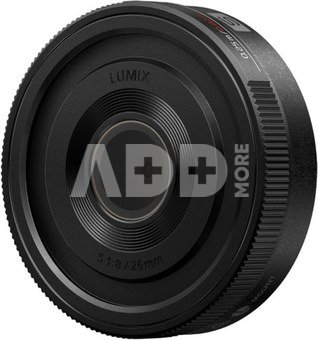
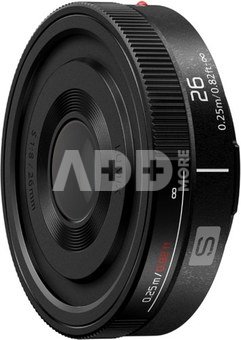
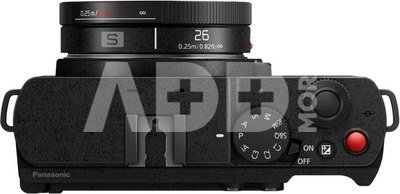
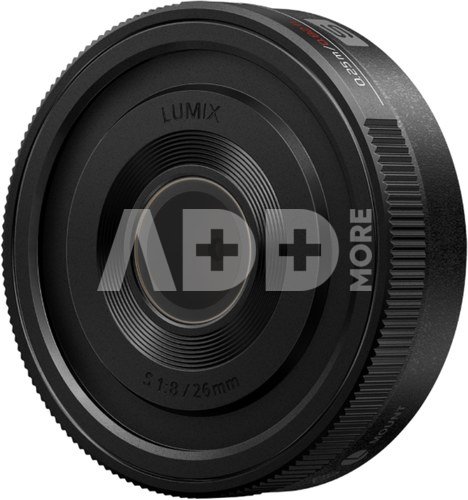
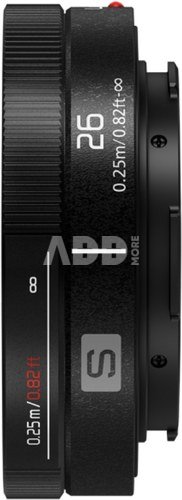
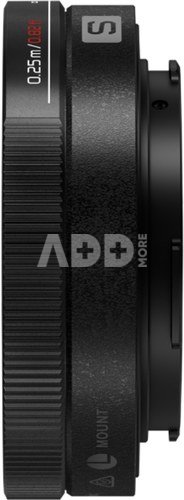
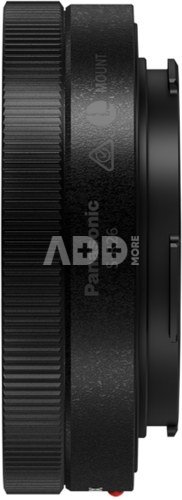
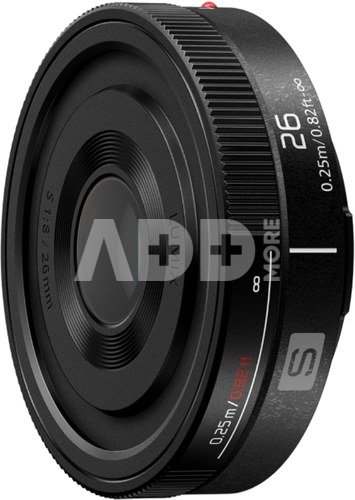
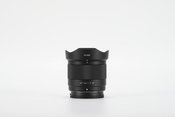
Panasonic LUMIX S 26mm F8.0 pancake (MF). The LUMIX S 26mm F8 (S-R26) is an incredibly compact and lightweight full frame lens. The slim design enhances portability, without compromising on high resolution and outstanding image quality. With a fixed focal length of 26mm, F-stop of F8, and manual focus, this new pancake lens is designed for the enjoyment of casual and creative shooting. Perfect for spontaneously capturing fleeting moments, the 26mm delivers unique results compared to the existing line-up of LUMIX S Series wide-angle, fixed focal length lenses.
%201(1).jpg)
FEATURES
- A new fixed focal length pancake lens in the LUMIX S Series.
- Manual focus allows creators to take full control of their own personal style of content creation.
- The lens has a wide angle of 26mm and a fixed F-stop of F8.
- Compact, lightweight lens perfect for everyday.
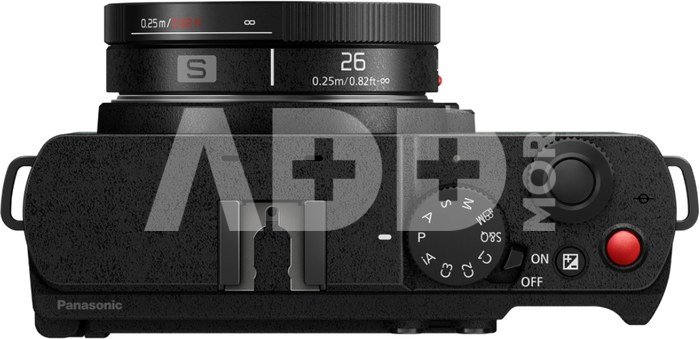
- Ultimate portability with a thin and lightweight body that fits into your pocket.
- Easy to carry around and start shooting at a moment’s notice, making it ideal for spontaneous snapshots.
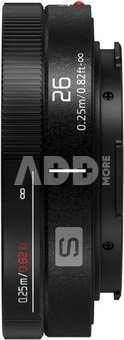
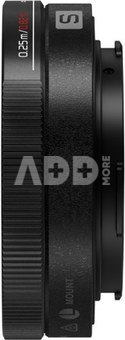
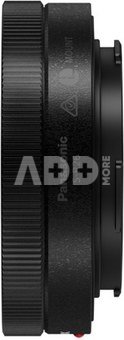
- Overall length of approximately 18.1mm and a weight of approximately 58 g.
%202.jpg)
SPECIFICATIONS
Lens mount: L-Mount
Focal length: 26 mm
Aperture: F8.0
Diagonal angle of view: 80°
Closest focussing distance: 25 cm
Maximum magnification: 0,14x
Filter: filter cannot be attached
Dimensions: 1,8 x 6,7 cm
Wight: 58 g
%206.jpg)
Typ of Sensor
Full frame
Max Aperture
8 F
Focal length Movie
26 mm
Discuss with a consultant in Kaunas
We don't have
Klaipėda Address: Birželio 23-iosios g. 23g Working hours: I-V 09:00 - 18:00 VI-VII not working Phone: +370 674 59488
Discuss with a consultant in Klaipėda
We don't have
Klaipėda Address: Taikos pr. 17 Working hours: I-V 10:00 - 19:00 VI 10:00 - 14:00 VII not working Phone: +370 604 43972
1. How to choose the right lens for a mirrorless camera?
When choosing the right lens for a mirrorless camera, it is important to consider your photography needs and style. First, decide on the resolution and focusing distance you require. For portraits, lenses with a wide aperture, such as a 50mm f/1.8, are often preferred. If you enjoy landscapes, go for a wide-angle lens (e.g., 24mm). To capture distant objects, telephoto lenses (e.g., 70-200mm) are useful. Another important factor is the lens’s light-gathering ability, which affects performance in low-light conditions. A stabilization system can also be important, especially for longer lenses. It’s important to evaluate the build quality of the lens and the manufacturer's reputation. Try out several lenses and consider your future needs to choose the right and long-lasting investment in your photography.
2. Are all lenses compatible with all mirrorless cameras?
Not all lenses are universal for all mirrorless cameras. Different manufacturers may have different mounts, so it is important to check the lens compatibility with your camera. For example, lenses for Canon, Nikon, Sony, and other manufacturers' mirrorless cameras may not be interchangeable without adapters. It is also important to consider the sensor size. APS-C lenses may be disproportionately large for full-frame cameras. Before purchasing a lens, it is advisable to check the manufacturer's compatibility chart and consider the specific requirements of your camera. Adapters can allow the use of third-party lenses, but there may be some loss in functionality or quality.

















Reviews
0 average rating (0 votes)