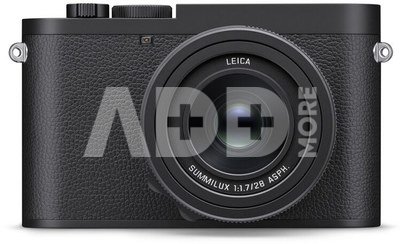
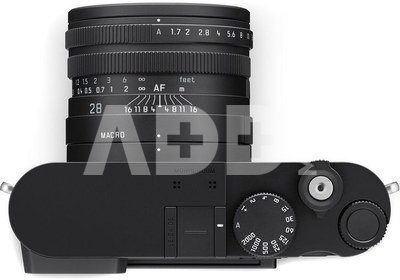
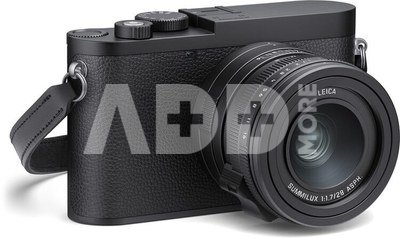
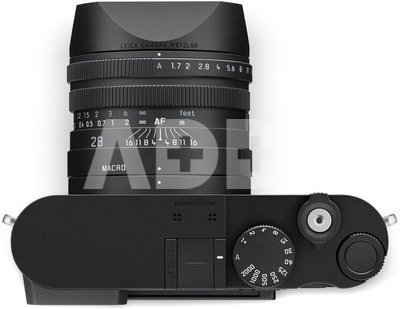
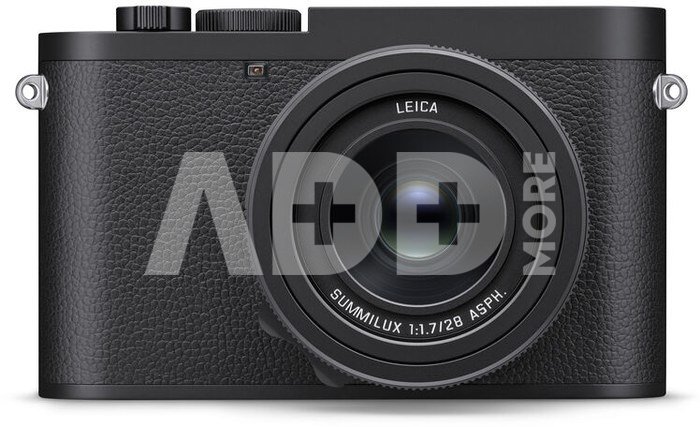
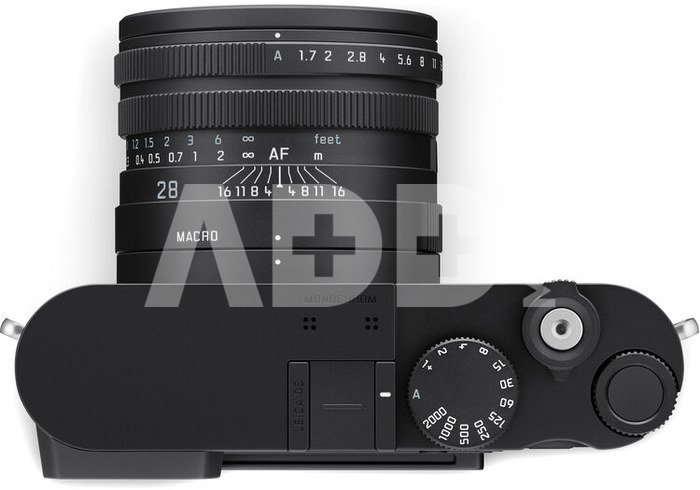
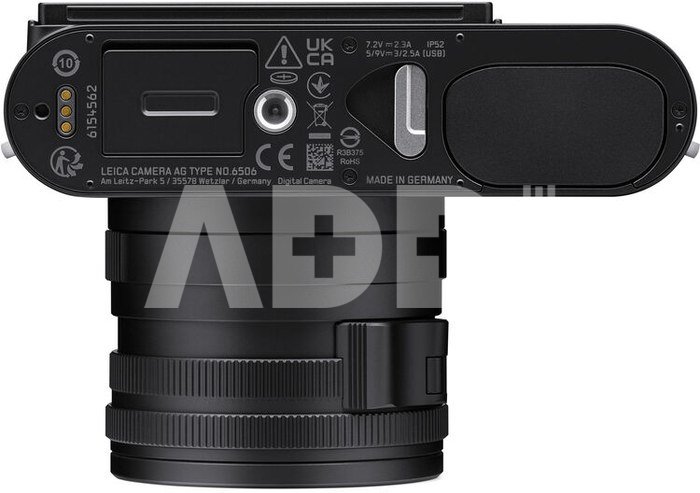
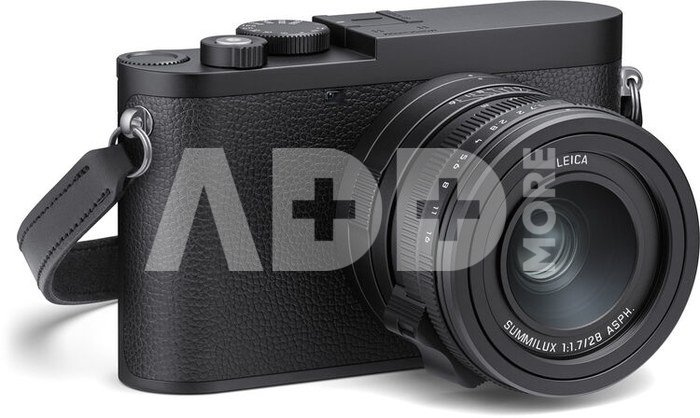
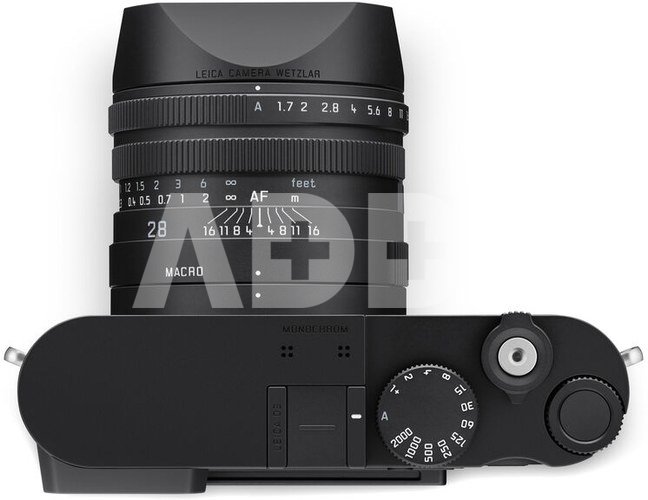
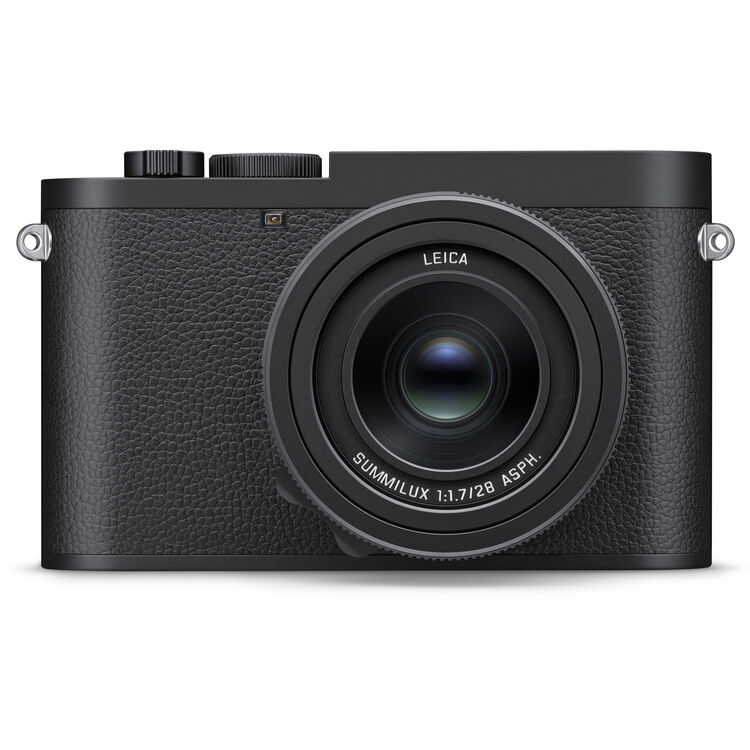
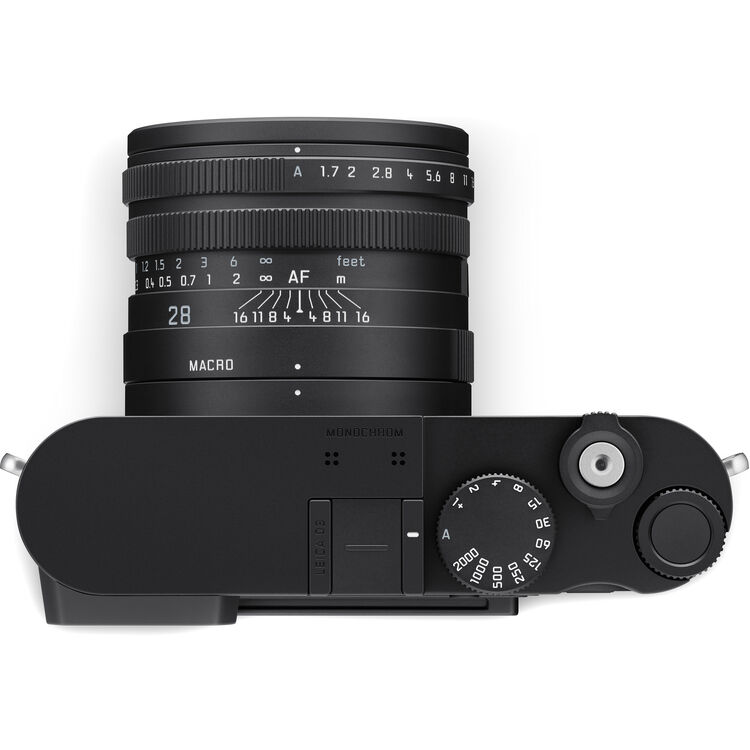
Leica Q3 Monochrom is a digital full-frame camera created exclusively for black-and-white photography. It features a dedicated 60.3 MP monochrome BSI CMOS sensor that does not capture color, but records light, shadows and tonal transitions. As a result, images appear exceptionally detailed, clean and contrast-rich. Unlike conventional cameras, the black-and-white image here is not created by simply converting a color photo. Leica Q3 Monochrom does not have a color filter array, so every sensor pixel is used to capture light information. This helps achieve better sharpness, smoother tonal transitions and less noise at higher ISO settings. The camera has an integrated Summilux 28 mm f/1.7 ASPH. lens. This is a bright, high-quality wide-angle lens suitable for everyday stories, street photography, travel, documentary work, architecture and environmental portraits. The 28 mm focal length provides a wider field of view, while the 60 MP resolution gives more freedom to crop the image later.
Who is it for?
Leica Q3 Monochrom is designed for photographers who consciously choose black-and-white photography. It is not a universal camera for every situation, but a specialized creative tool for those who want to work with light, shadows, shapes, textures and emotion.
This model is especially suitable for street photography. Its compact body, discreet black design without the bright red Leica logo, quiet operation and 28 mm lens make it easy to capture natural city scenes, people and everyday moments without attracting too much attention.
For documentary and reportage photography, Q3 Monochrom offers a classic, timeless look. Black-and-white photography helps direct the viewer’s attention to emotion, composition and the decisive moment, rather than color details.
For travel, this camera is attractive because of its one-lens concept. There is no need to change lenses or carry a large system — everything is contained in one compact body. The 28 mm lens allows you to photograph cities, landscapes, interiors, people and everyday travel stories.
For environmental portraits, Leica Q3 Monochrom is also a strong choice. It allows you to photograph a person together with their surroundings, while the black-and-white image gives portraits a more classic, characterful and emotionally deep look.
Main advantages
One of the biggest advantages of this model is its true monochrome sensor. Since the camera does not capture color, it can fully use the sensor’s potential for black-and-white imaging. The result is more detail, smoother tonal transitions and cleaner images, even in more difficult lighting conditions.
The 60.3 MP resolution allows you to create highly detailed images suitable for large-format printing, galleries, publishing or professional archiving. This resolution also gives more freedom to crop the frame without losing too much quality.
The Summilux 28 mm f/1.7 ASPH. lens is a key part of this camera’s character. It is bright, sharp and versatile, making it suitable for shooting during the day, in the evening and indoors. Optical image stabilization helps maintain sharpness when shooting handheld.
Triple Resolution technology allows you to choose between 60 MP, 36 MP or 18 MP resolution. This is useful when you sometimes need maximum quality and other times prefer smaller files for everyday use.
ISO up to 200,000 gives more freedom when shooting in low light. This is useful for evening street photography, interiors, events or situations where additional lighting is not desired.
8K black-and-white video allows you to create high-resolution monochrome video content. Although this camera is primarily made for photography, its video capabilities add creative flexibility for documentary, fashion, art or urban video projects.
Comparison with alternatives
Compared with the standard Leica Q3, the main difference is the sensor. The regular Q3 captures color and includes black-and-white modes, while the Q3 Monochrom is built exclusively for monochrome photography. If you need color photos, the Leica Q3 is the better choice. If the highest possible black-and-white quality is the priority, the Q3 Monochrom is the stronger option.
Compared with the Leica Q2 Monochrom, the newer Q3 Monochrom offers a higher 60.3 MP resolution, a tilting screen, a more advanced viewfinder, 8K video, USB-C connectivity and a more modern overall shooting experience. It is a more advanced monochrome version of the Q series.
Compared with the Leica M11 Monochrom, the Q3 Monochrom is simpler and faster for everyday use because it has an integrated autofocus 28 mm lens. The M11 Monochrom is better suited for those who want the Leica M system, manual focusing and interchangeable lenses. The Q3 Monochrom is the more practical choice for travel, street photography and fast shooting.
Compared with cheaper digital cameras, Leica Q3 Monochrom is a much more niche and expensive choice. Its value is not in universality, but in specialization: true black-and-white photography, Leica optics, a high-end body and a very refined shooting experience.
Design and use
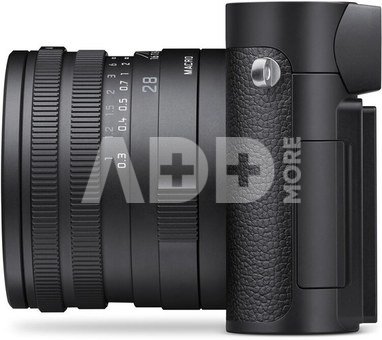
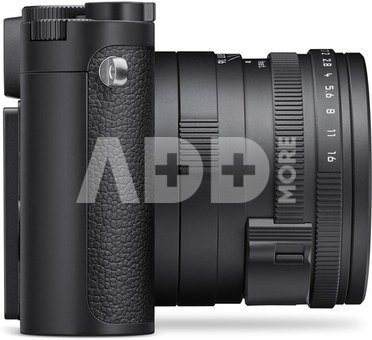
Leica Q3 Monochrom keeps the minimalist design of the Leica Q series. The body is black, discreet and without the bright red Leica logo, giving the camera a subtle and understated look. This is important when shooting on the street, while travelling or in documentary situations.
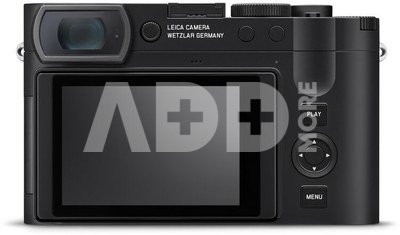
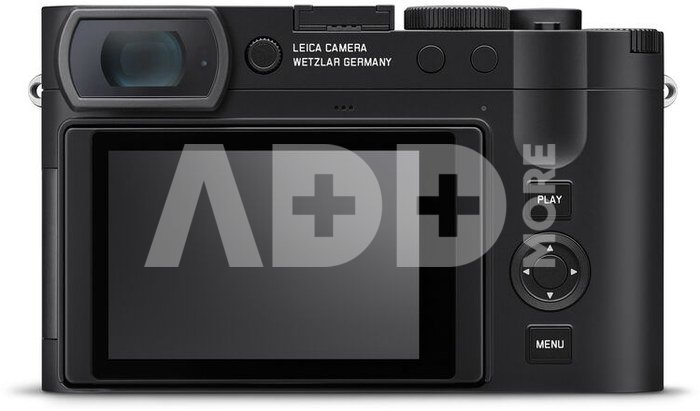
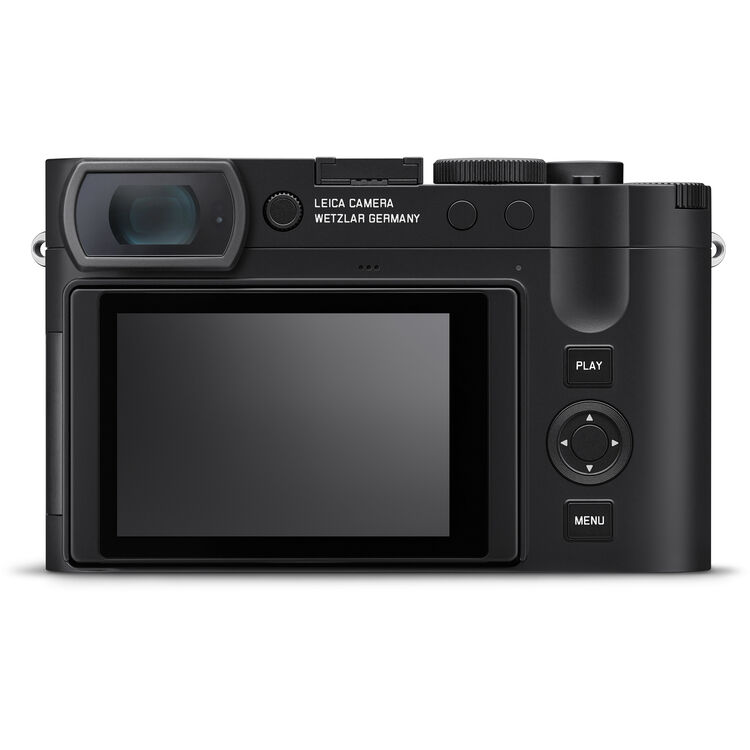
The tilting 3-inch touchscreen makes it convenient to shoot from lower or higher angles, while the 5.76-million-dot OLED electronic viewfinder provides a clear and detailed view for composing images.
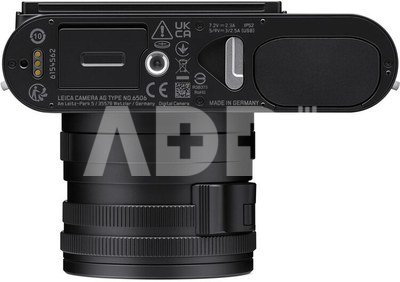
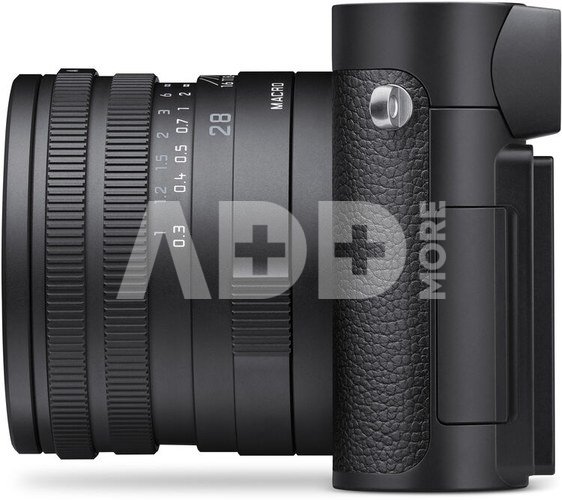
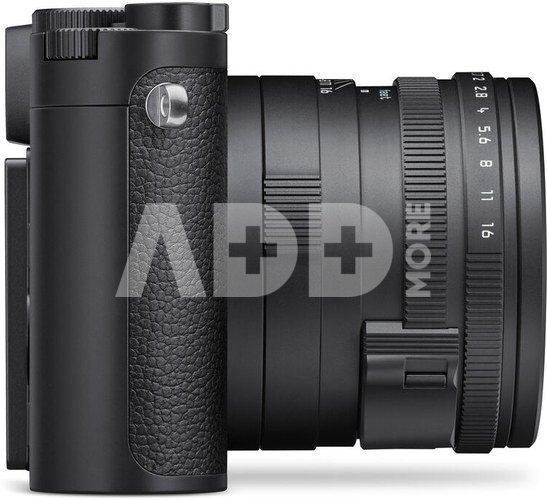
The body is made from magnesium alloy and has IP52 protection against dust and moisture. This does not mean the camera is intended for extreme use, but it is better prepared for everyday outdoor shooting conditions.
Why choose it?
Leica Q3 Monochrom is worth choosing when black-and-white photography is not just an additional effect, but the main creative direction. This camera helps you focus on light, composition, texture and the moment, instead of color correction or filters.
It is a camera for photographers who want one very high-quality tool for everyday use, travel, street photography, documentary work and artistic projects. It combines Leica optics, high resolution, a compact body and a true monochrome sensor.
Leica Q3 Monochrom is not the most rational choice for every buyer, because it does not shoot in color and is expensive. However, for a photographer who wants top-level black-and-white quality in a compact digital camera, it is one of the strongest options on the market.
FAQ
Is Leica Q3 Monochrom a digital camera?
Yes, it is a digital full-frame camera.
Does it shoot in color?
No. Leica Q3 Monochrom shoots only in black and white.
Is it the same as shooting with Leica Q3 in B&W mode?
No. Leica Q3 Monochrom has a dedicated monochrome sensor without a color filter array, so the black-and-white image is captured directly by the sensor, not created by converting color.
Can the lens be changed?
No. The lens is fixed — Summilux 28 mm f/1.7 ASPH.
Does it have zoom?
There is no optical zoom, but thanks to the 60 MP resolution, the camera offers digital crop options.
Is it suitable for professional work?
Yes, if the work involves black-and-white photography, documentary work, street photography, portraits or artistic projects.
Is it suitable for beginners?
Technically yes, but due to its price and monochrome specialization, it is more suitable for enthusiasts and professionals.
Can it record video?
Yes, it can record up to 8K resolution, but the video will also be black and white.
Specifications
Sensor: 60.3 MP full-frame B&W BSI CMOS
Sensor size: 35.8 × 23.9 mm
Lens: Summilux 28 mm f/1.7 ASPH.
Aperture: f/1.7–f/16
Focus: AF and MF
Minimum focusing distance: from 30 cm, from 17 cm in macro mode
Image stabilization: optical
ISO: 100–200,000
Resolution modes: 60 MP, 36 MP, 18 MP
File formats: DNG, JPEG
Video: up to DCI 8K 30p, 4K up to 60p, Full HD up to 120p
Viewfinder: OLED EVF, 5.76 million dots
Screen: 3-inch tilting touchscreen LCD
Memory cards: SD / SDHC / SDXC UHS-II
Connections: USB-C, micro-HDMI
Wireless: Wi-Fi, Bluetooth
Body: magnesium alloy
Protection: IP52
Battery: Leica BP-SCL6
Dimensions: approx. 130 × 80.3 × 92.6 mm
Weight: approx. 746 g with battery
Color: black
Effective pixels
60.3 mln. pixels
Optical zoom
1 x
Focal length Movie
28 mm
Discuss with a consultant in Kaunas
We don't haveKlaipėdaAddress: Birželio 23-iosios g. 23gWorking hours: I-V 09:00 - 18:00VI-VII not workingPhone: +370 674 59488
Discuss with a consultant in Klaipėda
We don't haveKlaipėdaAddress: Taikos pr. 17Working hours: I-V 10:00 - 19:00VI 10:00 - 14:00VII not workingPhone: +370 604 43972
Specification
Performance
Producer(?)
Link to the official manufacturer website
Leica
Effective pixels
60.3 mln. pixels
Optical zoom
1 x
Focal length Movie
28 mm
Sensor
60.3 MP full-frame B&W BSI CMOS sensor
Sensor Chip (inch)
Full frame
Maximum Resolution
9520 × 6336
Optical viewfinder
No, electronic OLED EVF, 5.76 million dots
ISO rating
ISO 100–200000
Auto Shift ISO
ISO 200–200000
ISO Manual
ISO 100–200000
Max. Light Sensitivity (ISO)
200000
Digital zoom
3.2 x
Image stabilization
Optical image stabilization integrated in the lens
Colour Depth (bit)
10-bit video recording
Focus
Autofocus and manual focus
Minimum Focus
17 cm
Normal focus range
From 30 cm to infinity
Macro focus range
From 17 cm to 30 cm
Aperture range
f/1.7–f/16
Shutter speed (sec)
120–1/16000 s
Built-in Flash
No
External flash
Yes, via hot shoe
Flash modes
Auto, on, off, slow sync
Exposure compensation
±3 EV in 1/3 EV steps
Manual Exposure
Yes
Programme Automatic
Yes
Aperture priority
Yes
Shutter priority
Yes
Bulb (Long Time Exposure)
Yes
Continuous Drive
Up to 15 fps
Movie Clips
Yes, up to DCI 8K 30p, 4K up to 60p, Full HD up to 120p
1. What are the main features to consider when choosing a digital camera?
When choosing a digital camera, it's important to consider several key features to ensure it meets your needs. First, define your goals: will it be for everyday photos, professional photography, or a compact travel camera? Choose the appropriate sensor size, which directly affects photo quality and performance in low light conditions. Consider the number of megapixels – more doesn’t necessarily mean better quality. Select the right lens based on your needs. It's also essential to take into account the camera’s size, weight, ease of control, battery life, recording formats, flash capabilities, and connectivity with other devices. Don’t forget your budget – choose something within your means. Before purchasing, it's important to read reviews and do thorough research to ensure you’ll be satisfied with your choice.
2. How to understand and use the digital camera's menu system and settings?
The digital camera's menu system may initially seem complicated, but it's important to understand the basic settings. Experienced photographers often experiment with different settings, but beginners are recommended to familiarize themselves with the main settings such as ISO and aperture. Most cameras come with a user manual, and there are plenty of online tutorials that can help you quickly grasp the menu systems and settings. The key is to experiment, as this will help you better understand how different settings work and how to use them optimally in different shooting conditions.
The website uses cookies, which help you ensure quality of service. Continuing browsing, you agree with fotoaparatas.eu cookies policy.Agree

















Reviews
0 average rating (0 votes)