Laowa Nanomorph S35 Prime 5 Lens Bundle  (27mm, 35mm, 50mm, 65mm, 80mm) (Silver) L Mount
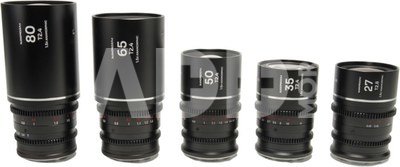
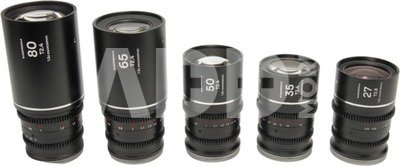
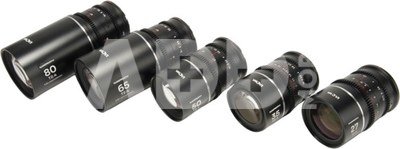
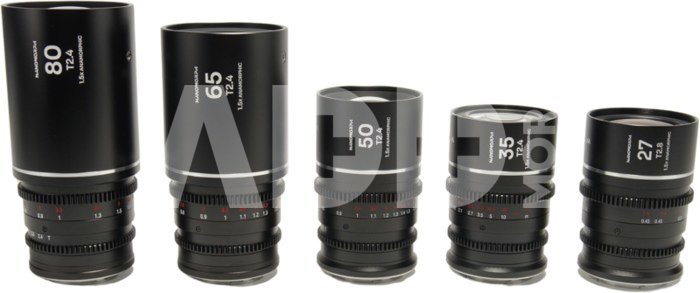
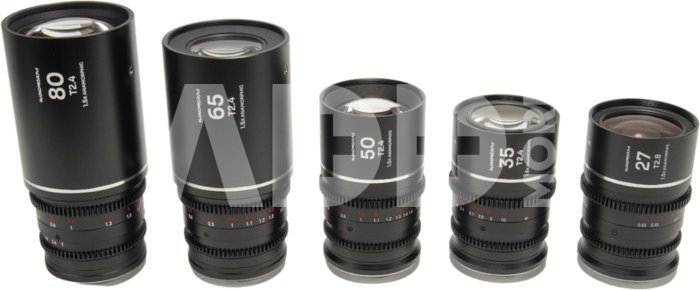
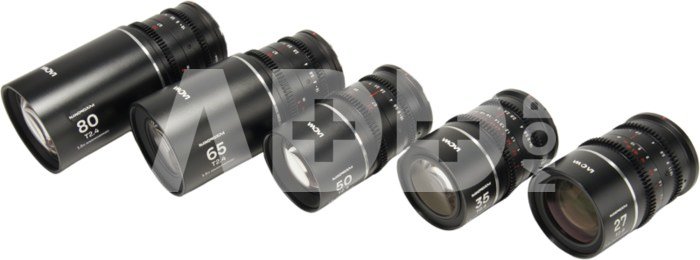
Laowa Nanomorph S35 Prime 5-Lens Bundle (27mm, 35mm, 50mm, 65mm, 80mm)All lenses in this bundle share a consistent 1.5X squeeze ratio, creating a cohesive visual aesthetic with beautifully compressed backgrounds and oval-shaped bokeh. The constant T2.4 aperture across the set ensures consistent exposure, even when switching lenses on set, streamlining workflows and minimizing time lost during lens changes.Engineered for Super 35 sensors, these lenses deliver sharp, vibrant images with minimal distortion and color fringing. Whether you prefer a more natural look or bold anamorphic flares, each lens is available in amber, blue, or silver flare options, giving you the flexibility to match your project’s visual tone. The optics are designed to maintain high resolution and color fidelity, so every frame looks cinematic straight out of the camera.In addition to their optical performance, the Nanomorph lenses are compact and lightweight, making them ideal for handheld, gimbal-mounted, or drone setups. The rugged all-metal construction ensures durability under demanding shooting conditions, while the smooth manual focus and de-clicked aperture rings allow for precise control, essential for professional-level productions.This five-lens bundle is perfect for filmmakers who want a versatile toolkit capable of handling diverse shooting scenarios. Whether you’re creating a short film, a feature, a documentary, or a music video, the Laowa Nanomorph S35 Prime 5-Lens Bundle provides the creative options needed to capture stunning anamorphic visuals.Key Features:Five focal lengths (27mm, 35mm, 50mm, 65mm, 80mm) for complete creative coverage1.5X squeeze ratio for cohesive anamorphic visuals with classic bokehT2.4 aperture across the set for consistent exposure and creative flexibilityThree flare options: Amber, Blue, or Silver to match any styleSuper 35 sensor coverage with sharp, clean, and vibrant image qualityCompact, lightweight, and durable design for professional-level reliabilitySmooth manual focus and de-clicked aperture control for precise adjustmentsWhat’s in the Box:Laowa Nanomorph 27mm T2.4 S35 LensLaowa Nanomorph 35mm T2.4 S35 LensLaowa Nanomorph 50mm T2.4 S35 LensLaowa Nanomorph 65mm T2.4 S35 LensLaowa Nanomorph 80mm T2.4 S35 LensFront and rear lens caps (for each lens)Lens pouch (for each lens)User manuals
Discuss with a consultant in Kaunas
We don't have
Klaipėda Address: Birželio 23-iosios g. 23g Working hours: I-V 09:00 - 18:00 VI-VII not working Phone: +370 674 59488
Discuss with a consultant in Klaipėda
We don't have
Klaipėda Address: Taikos pr. 17 Working hours: I-V 10:00 - 19:00 VI 10:00 - 14:00 VII not working Phone: +370 604 43972
1. How to choose the right lens for a mirrorless camera?
When choosing the right lens for a mirrorless camera, it is important to consider your photography needs and style. First, decide on the resolution and focusing distance you require. For portraits, lenses with a wide aperture, such as a 50mm f/1.8, are often preferred. If you enjoy landscapes, go for a wide-angle lens (e.g., 24mm). To capture distant objects, telephoto lenses (e.g., 70-200mm) are useful. Another important factor is the lens’s light-gathering ability, which affects performance in low-light conditions. A stabilization system can also be important, especially for longer lenses. It’s important to evaluate the build quality of the lens and the manufacturer's reputation. Try out several lenses and consider your future needs to choose the right and long-lasting investment in your photography.
2. Are all lenses compatible with all mirrorless cameras?
Not all lenses are universal for all mirrorless cameras. Different manufacturers may have different mounts, so it is important to check the lens compatibility with your camera. For example, lenses for Canon, Nikon, Sony, and other manufacturers' mirrorless cameras may not be interchangeable without adapters. It is also important to consider the sensor size. APS-C lenses may be disproportionately large for full-frame cameras. Before purchasing a lens, it is advisable to check the manufacturer's compatibility chart and consider the specific requirements of your camera. Adapters can allow the use of third-party lenses, but there may be some loss in functionality or quality.

















Reviews
0 average rating (0 votes)