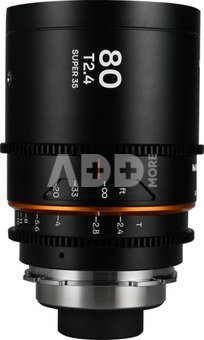
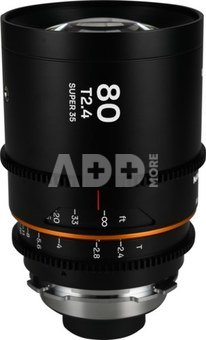
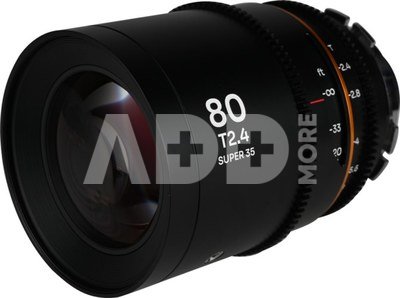
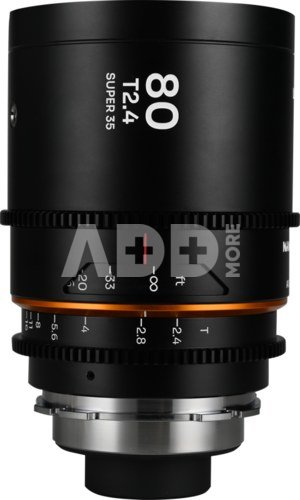
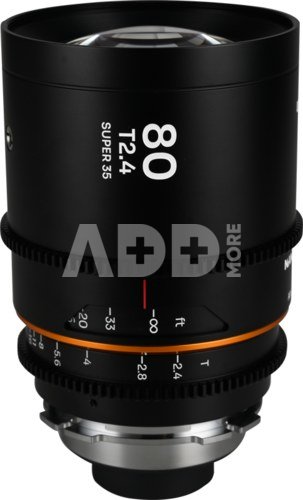
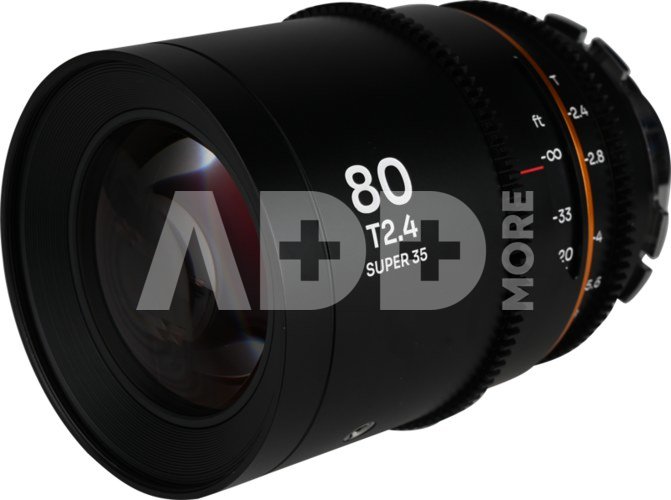
Laowa Nanomorph 80mm T2.4 1.5X S35 (Amber) Arri PL (Default) + EF
Laowa Nanomorph 80mm T2.4 1.5X S35Built to match the rest of the Nanomorph series, the 80mm T2.4 retains Laowa’s signature design, offering blue, amber, or silver flare options to suit different creative styles. The lens is optimized for Super 35 sensors and features a compact form factor that makes it highly versatile for handheld, gimbal, and rig-based shooting. Its smooth focus and aperture control allow precise adjustments, ensuring professional-level cinematic results in any production environment.Key Features:1.5X squeeze ratio for true anamorphic visuals with stunning depth compression80mm focal length for a flattering telephoto perspectiveT2.4 aperture for excellent light transmission and depth of field controlAvailable in blue, amber, or silver flare options for different cinematic aestheticsSuper 35 sensor coverage with sharp image quality and minimal distortionCompact and lightweight design for handheld, gimbal, and rig useSmooth manual focus and aperture control for precise operation in film productionWhat’s in the Box:Laowa Nanomorph 80mm T2.4 1.5X S35 LensFront and rear lens capsLens pouchUser manualWith its premium optics, signature anamorphic flares, and versatile telephoto focal length, the Laowa Nanomorph 80mm T2.4 1.5X S35 is an essential tool for filmmakers looking to achieve high-quality anamorphic cinematography in a compact and lightweight package.
Discuss with a consultant in Kaunas
We don't have
Klaipėda Address: Birželio 23-iosios g. 23g Working hours: I-V 09:00 - 18:00 VI-VII not working Phone: +370 674 59488
Discuss with a consultant in Klaipėda
We don't have
Klaipėda Address: Taikos pr. 17 Working hours: I-V 10:00 - 19:00 VI 10:00 - 14:00 VII not working Phone: +370 604 43972
1. How to choose the right lens for a mirrorless camera?
When choosing the right lens for a mirrorless camera, it is important to consider your photography needs and style. First, decide on the resolution and focusing distance you require. For portraits, lenses with a wide aperture, such as a 50mm f/1.8, are often preferred. If you enjoy landscapes, go for a wide-angle lens (e.g., 24mm). To capture distant objects, telephoto lenses (e.g., 70-200mm) are useful. Another important factor is the lens’s light-gathering ability, which affects performance in low-light conditions. A stabilization system can also be important, especially for longer lenses. It’s important to evaluate the build quality of the lens and the manufacturer's reputation. Try out several lenses and consider your future needs to choose the right and long-lasting investment in your photography.
2. Are all lenses compatible with all mirrorless cameras?
Not all lenses are universal for all mirrorless cameras. Different manufacturers may have different mounts, so it is important to check the lens compatibility with your camera. For example, lenses for Canon, Nikon, Sony, and other manufacturers' mirrorless cameras may not be interchangeable without adapters. It is also important to consider the sensor size. APS-C lenses may be disproportionately large for full-frame cameras. Before purchasing a lens, it is advisable to check the manufacturer's compatibility chart and consider the specific requirements of your camera. Adapters can allow the use of third-party lenses, but there may be some loss in functionality or quality.

















Reviews
0 average rating (0 votes)