DescriptionFujifilm Fujinon XF 16-55mm f/2.8 R LM WR II description
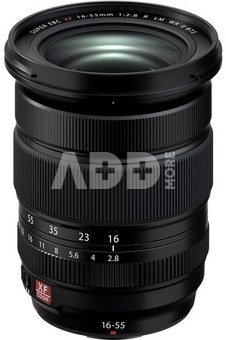
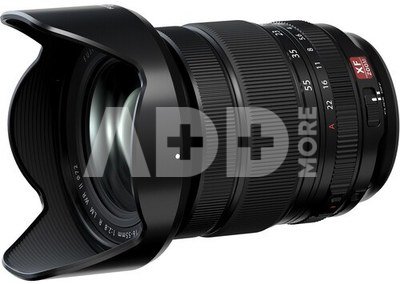
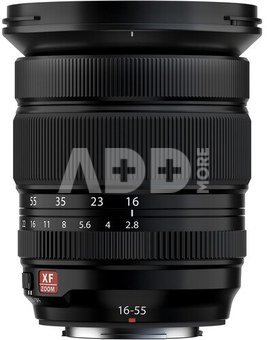
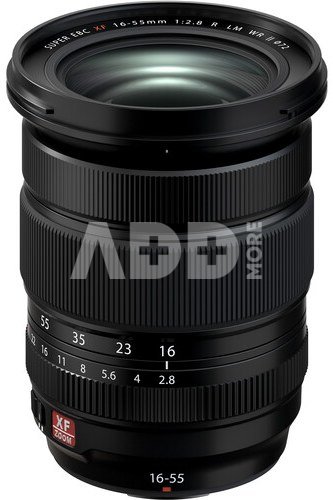
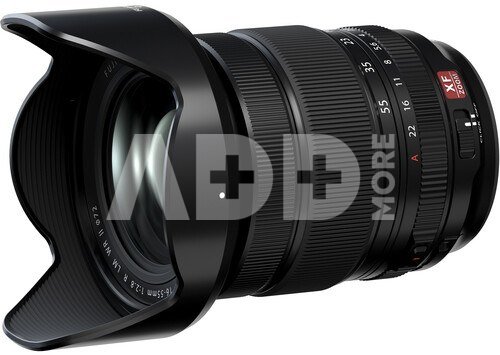
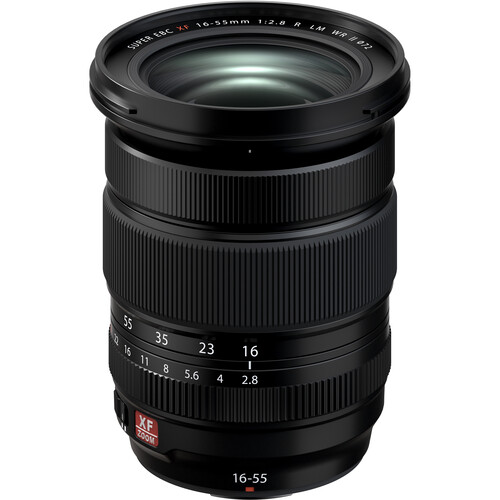
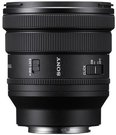
Introducing Fujifilm Fujinon XF 16-55mm f/2.8 R LM WR II! Nine years after its predecessor (the original FUJINON XF 16-55mm F2.8 R LM WR lens), Fujifilm’s flagship F2.8 standard zoom lens is reborn. FUJINON XF 16-55mm F2.8 R LM WR II lens features groundbreaking design updates that surpass mere evolutionary progress, plus broader video capabilities to help it excel in a wider range of scenarios. Compact and lightweight, this zoom fits in the palm of your hand, yet delivers image quality to rival a prime lens.
MINIMAL SIZE, MAXIMUM PERFORMANCE
Cutting-Edge Optical Tech in a Lens Just 95 mm Long: Advances in lens manufacturing techniques have led to a major drop in XF 16-55mm F2.8 R LM WR II lens’s size and weight compared to its predecessor, XF 16-55mm F2.8 R LM WR. Improved polishing and machining, plus advanced assembly techniques, mean the second generation lens is now 11mm shorter and approximately 37% lighter than its predecessor. The filter thread has also been decreased to 72 mm, so the new lens uses the same filters as the original XF 50-140mm F2.8 R LM OIS WR.
A WORTHY SUCCESSOR
Building on the Renowned Sharpness of XF Zoom Lenses: While retaining the exceptional sharpness of its award-winning predecessor, an extra ED element has been added to XF 16-55mm F2.8 R LM WR II lens to enhance edge sharpness and minimize chromatic aberration. In addition, advances in aspherical lens technology and ultra-fine machining combine to reduce ring patterns and create smooth bokeh effects. Even at the maximum aperture – an area where zoom lenses traditionally struggle – it delivers high-quality results with ultra-fine details.
ONE LENS, A MULTITUDE OF OPTIONS
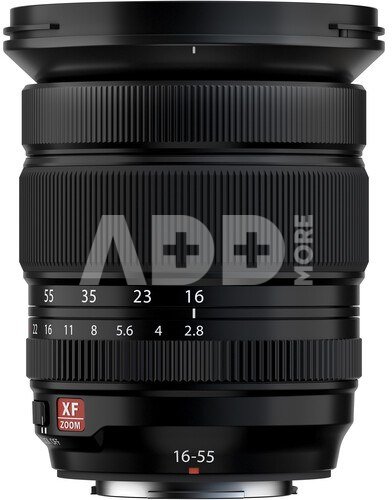
Compromise-Free Creativity: From wide angle to telephoto, XF 16-55mm F2.8 R LM WR II lens lets you record every moment with the utmost precision. At 16 mm, it offers broad coverage; 23 mm is ideal for everyday scenes, and brings documentary and street photography to life; while 55mm is ideal for portraiture and lets you focus on details. Whichever focal length you choose, the F2.8 maximum aperture delivers excellent low-light performance and – thanks to its unique, 11-blade diaphragm – smooth, pronounced bokeh.
FAST, PRECISE AUTOFOCUS
High-Speed, Near-Silent Autofocus with No Drop in Performance: Despite its compact size, XF 16-55mm F2.8 R LM WR II lens produces exceptional autofocus performance. This is thanks to a specially designed linear motor that enables fast and near-silent AF. The minimum focusing distance of 0.3 m and maximum magnification of 0.21x provide impressive scope for close-up images.
NEW FEATURES FOR HYBRID CREATION USE
Although primarily created for stills photographers, XF 16-55mm F2.8 R LM WR II lens also caters to the needs of video creatives. For the first time on an XF Lens, a switch allows users to disable the aperture ring’s click stops for smooth, near-silent exposure control, free from clicks and vibrations*. *May require firmware update of applicable X Series body. New features available in Movie mode when using Manual Exposure mode and a fixed ISO.
COMPACT, LIGHTWEIGHT AND WEATHER-RESISTANT
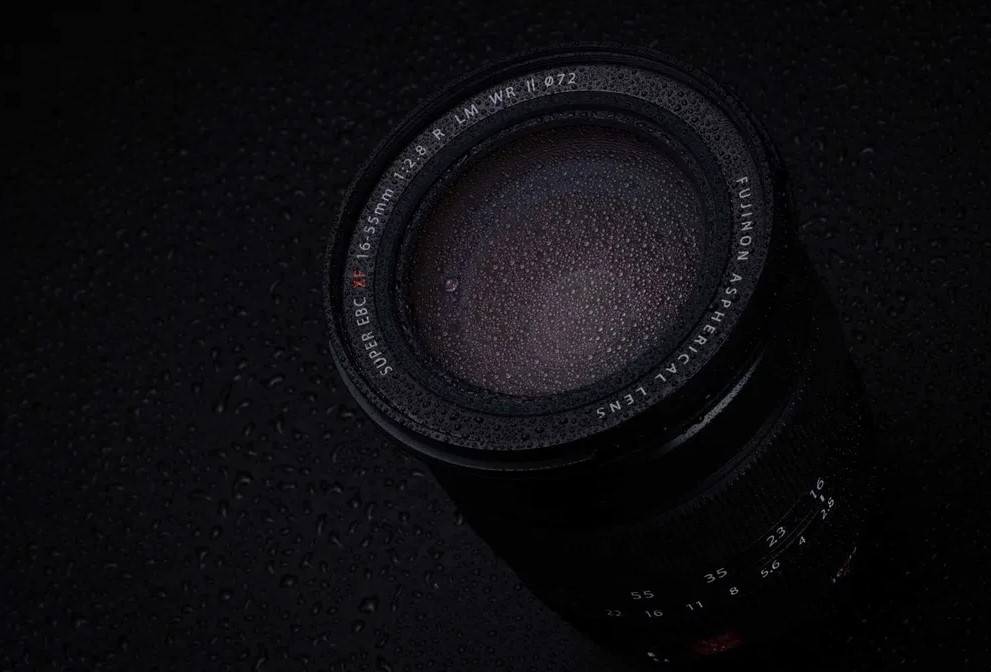
The most dramatic moments often come in adverse weather conditions. That’s why XF 16-55mm F2.8 R LM WR II lens is designed to be dust and moisture resistant when paired with a weather-resistant X Series body, ideal for those who want to work anywhere in almost any conditions. Keep creating without worrying about water droplets, sand, dust, and low temperatures down to -10 °C.
SPECIFICATIONS
Lens type: Zoom lens
Max Format size: APS-C / DX
Focal length: 16-55 mm
Focal length (35mm format equivalent): 24-84 mm
Image stabilization: No
Lens mount: Fujifilm X
Lens configuration: 16 elements in 11 groups (includes 4 aspherical, 3 ED elements, 1 super ED element)
Angle of view: 83.2°- 29°
Max. aperture: f/2.8
Min. aperture: f/22
Number of blades: 11 (rounded diaphragm opening)
Stop size: 1/3 EV (19 stops)
Minimum focus distance (measured from focal plane): 0.3 m
Max. magnification: T: 0.21 x
External dimensions : Diameter x Length* (approx.) (*distance from camera lens mount flange): W: φ78.3 mm × 95 mm; T: φ78.3 mm × 122 mm
Weight* (approx.) (*excluding cap and hood): 410 g
Filter size: Φ72mm
Type
zoom
Typ of SensorAPS-C / DX
Focal length (wide)
16 mm
Discuss with a consultant in Kaunas
We don't haveKlaipėdaAddress: Birželio 23-iosios g. 23gWorking hours: I-V 09:00 - 18:00VI-VII not workingPhone: +370 674 59488
Discuss with a consultant in Klaipėda
We don't haveKlaipėdaAddress: Taikos pr. 17Working hours: I-V 10:00 - 19:00VI 10:00 - 14:00VII not workingPhone: +370 604 43972
1. How to choose the right lens for a mirrorless camera?
When choosing the right lens for a mirrorless camera, it is important to consider your photography needs and style. First, decide on the resolution and focusing distance you require. For portraits, lenses with a wide aperture, such as a 50mm f/1.8, are often preferred. If you enjoy landscapes, go for a wide-angle lens (e.g., 24mm). To capture distant objects, telephoto lenses (e.g., 70-200mm) are useful. Another important factor is the lens’s light-gathering ability, which affects performance in low-light conditions. A stabilization system can also be important, especially for longer lenses. It’s important to evaluate the build quality of the lens and the manufacturer's reputation. Try out several lenses and consider your future needs to choose the right and long-lasting investment in your photography.
2. Are all lenses compatible with all mirrorless cameras?
Not all lenses are universal for all mirrorless cameras. Different manufacturers may have different mounts, so it is important to check the lens compatibility with your camera. For example, lenses for Canon, Nikon, Sony, and other manufacturers' mirrorless cameras may not be interchangeable without adapters. It is also important to consider the sensor size. APS-C lenses may be disproportionately large for full-frame cameras. Before purchasing a lens, it is advisable to check the manufacturer's compatibility chart and consider the specific requirements of your camera. Adapters can allow the use of third-party lenses, but there may be some loss in functionality or quality.
The website uses cookies, which help you ensure quality of service. Continuing browsing, you agree with fotoaparatas.eu cookies policy.Agree


















Reviews
0 average rating (0 votes)