Canon 35mm F1.4L EF II USM
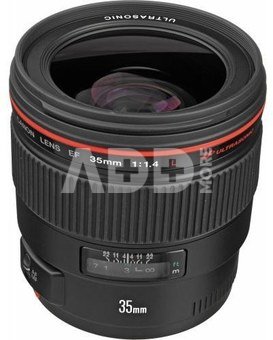
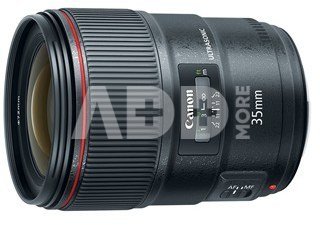
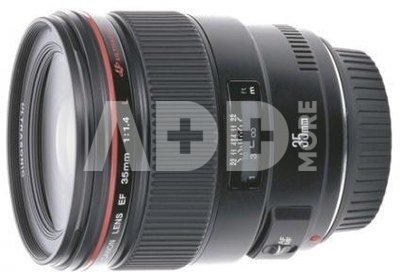
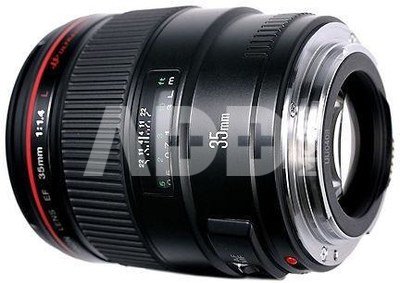
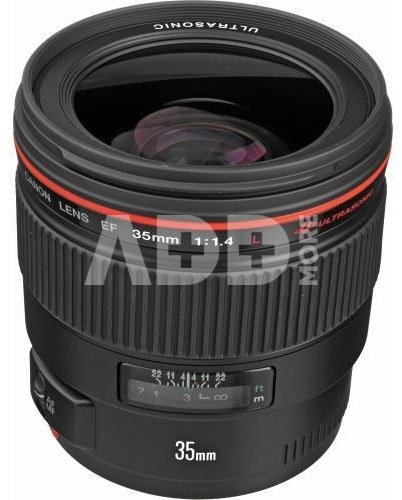
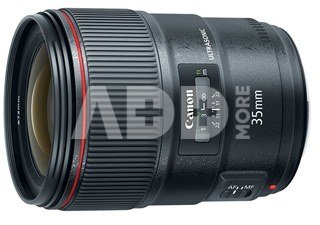
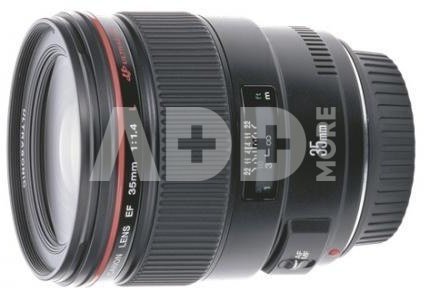
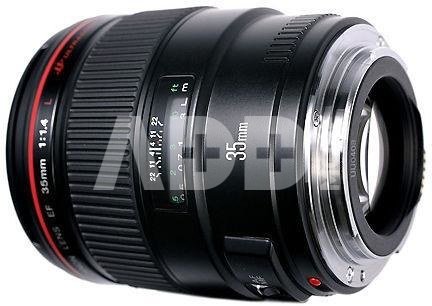
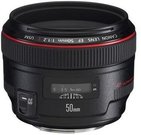
Canon EF 35mm f / 1.4L II USM.
A true classic in the modern version: a standard wide-angle lens loved by photojournalists for a natural perspective, good results when shooting in low light and excellent optical performance.
Provides a wide viewing angle with a natural perspective.
A classic wide-angle focal length of 35 mm loved by photojournalists for the ability to capture the object with the surroundings without distorting the perspective.
Excellent work in low light.
This lens has a large maximum aperture of f / 1.4, which transmits by two degrees more light than f / 2.8 zoom lenses, making it the ideal lens for handheld shooting in low light conditions.
Shooting with a wide aperture setting allows you to reduce the depth of field. Creating a shallow depth effect is one way to make the object stand out from the background. This method is particularly effective when combined with a wide angle of view of the lens. The 9-lens aperture of the lens provides a non-uniform area with a uniform and natural look.
A new standard of image quality.
Optics with blue light refraction technology made of organic optical material developed by Canon prevents color rims from appearing by correcting chromatic aberrations much more effectively than with previous models. Ultra-low dispersion optics (UD) and two aspherical elements ensure incredible sharpness of the entire frame, even with a large aperture. Subwovelength Structure Coating (SWC) enhances contrast and protects against flare and ghost effects when photographing against backlight.
Quick and quiet focus allows you to capture unexpected moments.
Autofocus with the USM ring motor adjusts the focus quickly, accurately and virtually noiselessly, without disturbing the shot.
Full manual focus adjustment allows you to adjust it without having to change the mode and move the camera away from the eye.
Do not interrupt shooting even in difficult conditions.
Famous for its high-quality workmanship, Canon's L-series design ensures reliability and increases lens durability. Resistance to weather conditions protects the camera against dust and moisture, and the fluoride coating on the front and rear optical element of the lens protects against grease and dirt and facilitates cleaning.
Optics with technology for eliminating blue light refraction.
Canon has developed an optics technology to eliminate blue refraction (BR) to remove colored rims in large-diameter lenses. This special organic optical material corrects this type of border much more effectively than other technologies such as fluorite, very low dispersion (UD) or Super UD. Colored borders arise due to chromatic aberrations. This is the phenomenon of focusing individual colors of light at different points. Thanks to the use of the BR optical material, the EF 35mm f / 1.4L II USM lens reduces this effect to a minimum. Other lens elements can then be optimized for maximum sharpness and better image contrast, as well as less vulnerability to the flare effect.
Lens mount (bayonet)
Canon EF mount
Typ of Sensor
Full Frame
Max Aperture
1.4 F
Discuss with a consultant in Kaunas
We don't have
Klaipėda Address: Birželio 23-iosios g. 23g Working hours: I-V 09:00 - 18:00 VI-VII not working Phone: +370 674 59488
Discuss with a consultant in Klaipėda
We don't have
Klaipėda Address: Taikos pr. 17 Working hours: I-V 10:00 - 19:00 VI 10:00 - 14:00 VII not working Phone: +370 604 43972
1. How to choose the right lens for your DSLR camera?
Choosing the right lens for your DSLR camera depends on your photography style and preferences. If you enjoy portrait photography, a prime lens with a wide aperture (low f-number) can create beautiful background blur. For versatility, a standard zoom lens is a great option. Assess your needs and select lenses with features that align with your photography goals.
2. What are DSLR camera lenses, and what are their features?
DSLR camera lenses are specifically designed for DSLR (Digital Single-Lens Reflex) or SLT (Single-Lens Translucent) systems. These lenses have a compact design and are optimized for effective operation with DSLR cameras. They feature complex optical constructions that allow capturing high-quality images. DSLR lenses come in various focal lengths, from wide-angle lenses suitable for landscapes to long telephoto lenses ideal for sports or wildlife photography.






![Sigma 50-100mm F1.8 DC HSM Nikon [ART]](https://www.fotoaparatas.eu/data/images/catalog_pics/n_thumb/objektyvas-sigma-dc-50-100mm-f1-8-hsm-art-n-af.jpg "Sigma 50-100mm F1.8 DC HSM Nikon [ART]")












Reviews
0 average rating (0 votes)