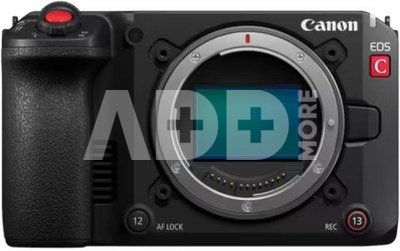
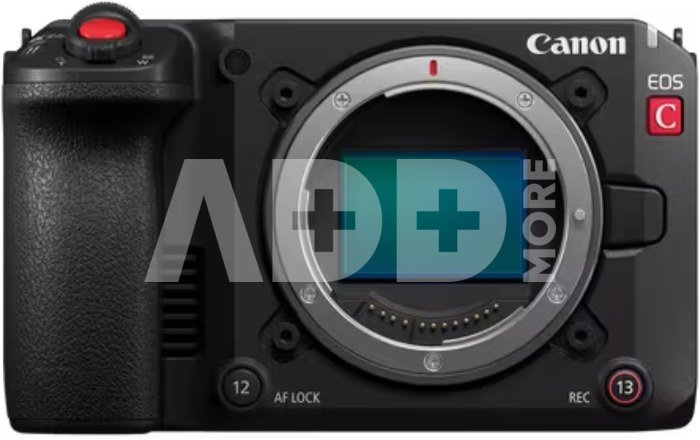
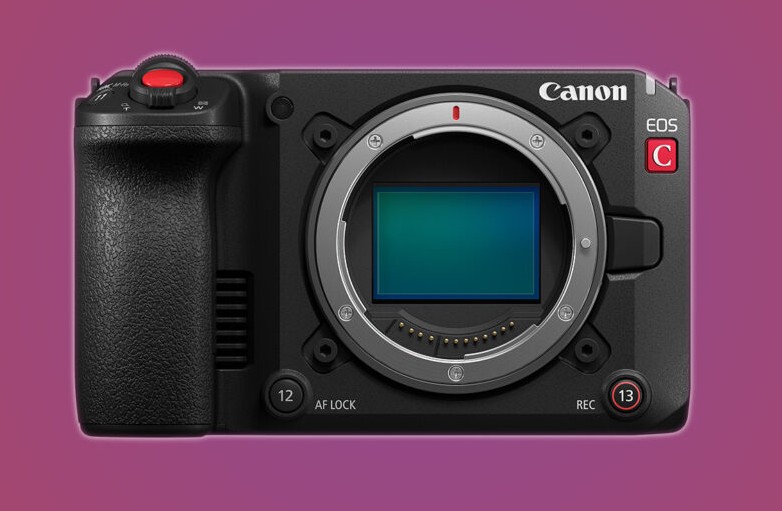
Canon EOS C50 - Full-Frame, 3:2 Open-Gate, 7K/60p Compact Cinema Camera with Internal RAW Recording. At the heart of the Canon EOS C50 is a 7K full-frame CMOS image sensor. The camera is powered by a DIGIC DV 7 image processor, which is the same one that powers the EOS C70/C80/C500 MKII, to name a few. This image sensor and image processor combination allows the EOS C50 to capture footage internally in resolutions up to 7K at 60 frames per second in 12-bit Cinema RAW Light (full-frame), as well as 4K120P and 2K180P. Please note that for 4K recording modes, the recordings are oversampled from the entire 7K image, resulting in no cropping and high-quality recording. In photo mode, you can expect 32MP still photos, which should be more than enough for most shooting scenarios.
SUPPORTS MULTIPLE RECORDING FORMATS
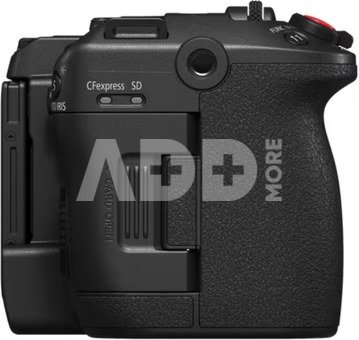
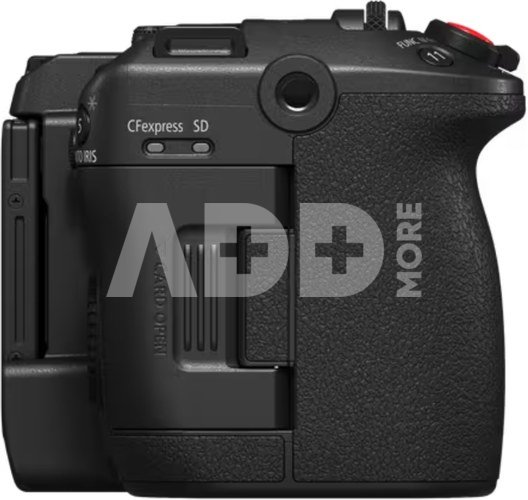
The EOS C50 supports multiple recording formats, including 12-bit Cinema RAW Light in Canon Log 2/Canon Log 3 picture profiles, as well as XF-AVC, XF-AVC S, and XF-HEVC S 10-bit 4:2:2 formats for fast turnaround projects. The camera features an 800/6400 Dual Base ISO in Canon Log 2/Canon Log 3/RAW recording modes. In PQ/HLG/Canon 709/BT.709 and Wide DR picture profiles, the Dual Base ISO values are 400 and 3200. The camera features two memory card slots: one CFexpress Type B and one SD card slot. Some RAW and XF-AVC recording modes are only possible on the CFexpress memory card slot. This dual slot capability allows for simultaneous video recording of different file formats, resolutions, and proxy setups to each card, as well as backup recording. A long-requested feature is finally making its debut with the EOS C50: open gate recording. This recording mode uses the entire area of the full-frame 3:2 image sensor, capturing the full width and height of the sensor (6960 x 4640). Please note that this mode is only available for Cinema RAW Light / XF HEVC S recording, with a maximum frame rate of 30P. Open gate recording has two main benefits: Firstly, it utilizes the full image circle of full-frame lenses, enabling the editing of both horizontal and vertical movie formats from the same footage, with the added flexibility of reframing shots. Secondly, and I suppose the most used case scenario, when using anamorphic lenses, you don’t lose any pixels by shooting 3:2 open gate, resulting in a taller image with a wide cinematic look. With the current expectation for content creators to produce both horizontal and vertical/square videos at the same time, Canon has launched a Simultaneous Crop Recording feature. This function enables you to capture a complete-angle image in 4K DCI or 4K UHD, alongside a 2K cropped vertical or square version in 9:17, 9:16, or 1:1 aspect ratio, ideal for social media and advertising purposes. The area that is cropped can be adjusted horizontally to achieve optimal framing and can be recorded in an alternate format to meet delivery specifications. Last but not least, according to Canon, the EOS C50 has 15+ stops of dynamic range. Of course, you can expect us to test the rolling shutter, dynamic range, and exposure latitude of this camera soon in our Lab Test.
CANON EOS C50 – CAMERA BODY AND CONNECTIVITY
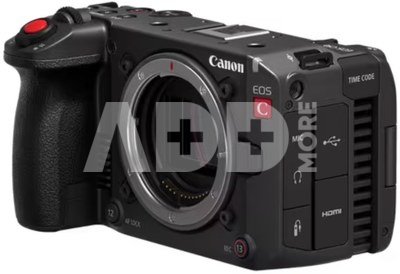
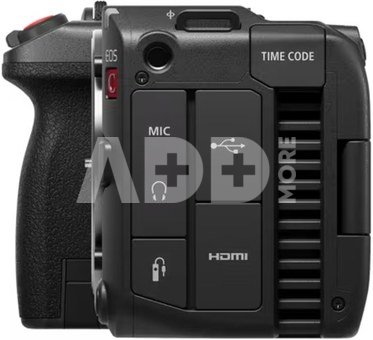
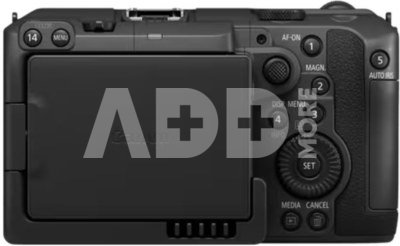
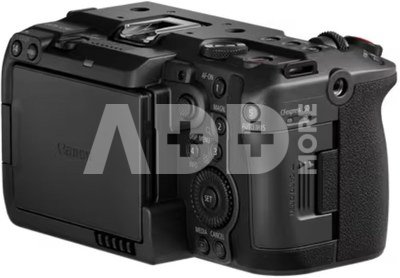
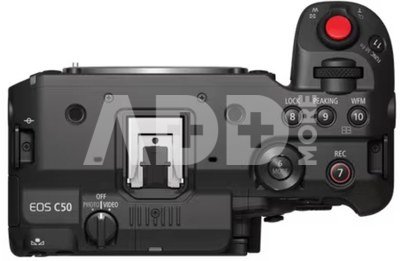
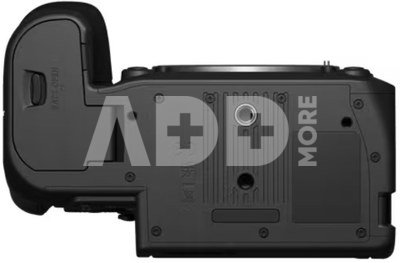
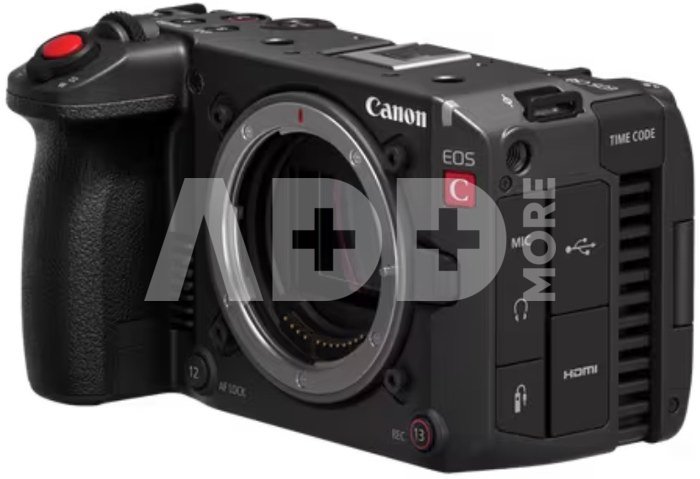
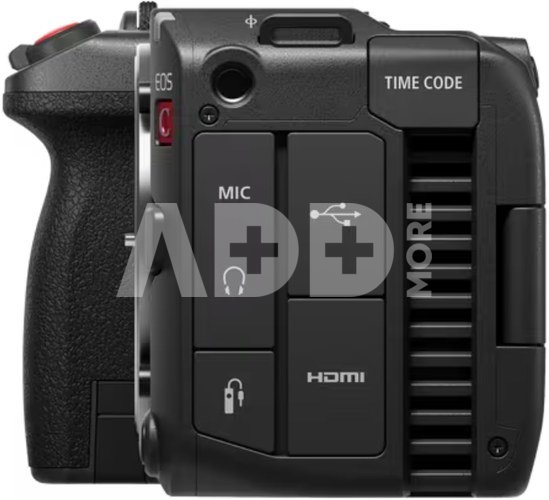
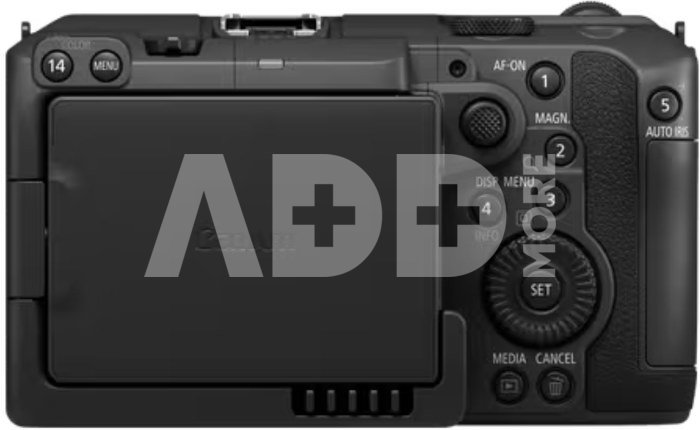
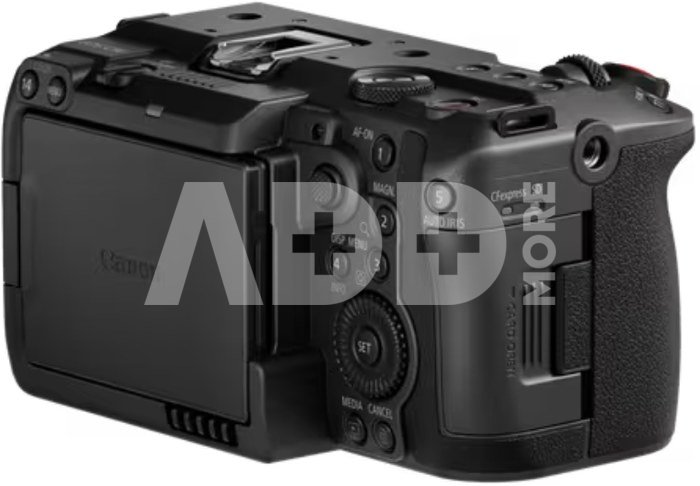
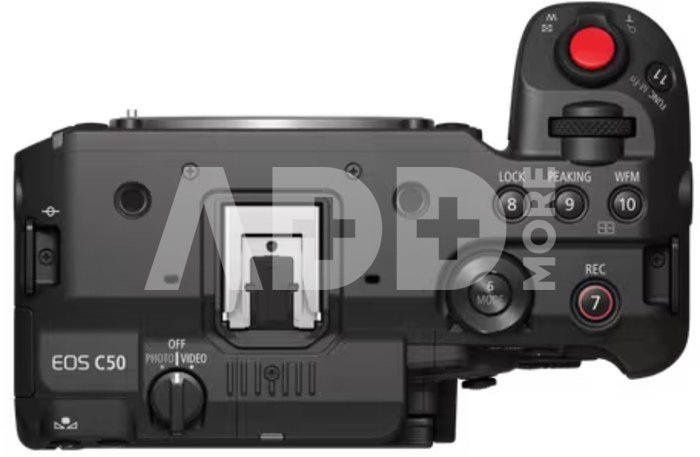
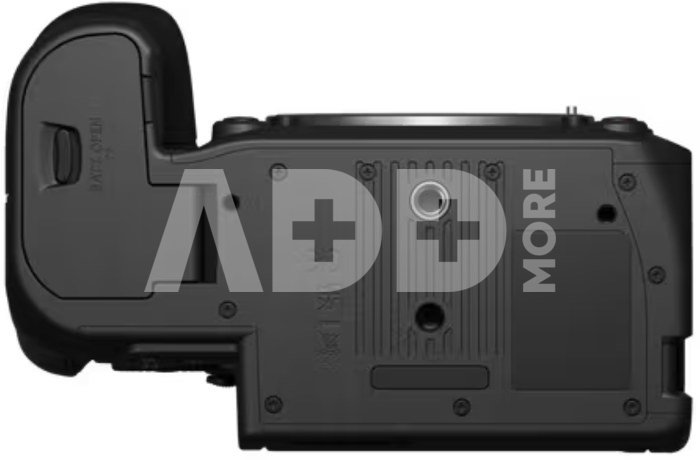
The EOS C50 is a hybrid camera that weighs around 670 g and measures 142 x 88 x 95 mm that can be looked at as the successor of the EOS R5 C, so it includes the same physical switch for toggling between Photo and Video modes. The display is customized depending on whether the camera is set to Video or Photo mode. Essentially, in video mode, you’ll see the Cinema EOS interface, while in stills mode, it utilizes the Canon EOS R menu system. Also, since you can mount the camera either horizontally or vertically, the display and menu settings can adjust/flip to support vertical orientation. The EOS C50 is powered via Canon LP-E6P batteries (provided with the camera) or LP-E6NH batteries with limitations, and it features one 1/4″-20 mounting point at the bottom, one 1/4″-20 mounting point on the right side, and two 1/4″-20 mounting points at the top of the camera. Similar to most recent Cinema EOS cameras, the C50 features a Canon RF lens mount, compatible with the company’s (and third-party) EF/PL lens mount adapters. The optional Canon PL-RF Mount Adapter can be securely fastened to the camera body, which is handy for creating a very secure camera build. If you use Canon RF/EF lenses, you’ll benefit from Canon’s Dual Pixel CMOS AF II, similar to the one in the EOS C80/C400, offering subject detection and tracking that covers 100% of the image sensor. This autofocus system is one of the best on the market as it is extremely precise and accurate, allowing you to select which eye to prioritise in people, dogs, cats, and birds – with controls for tuning autofocus speed and tracking response to suit the subject. Regarding input and output ports, the EOS C50 features one full-size HDMI output port, one USB-C port, a timecode terminal, a 3.5mm microphone input, a 3.5mm headphone output, and a multi-function shoe. The camera comes with a compact detachable top handle unit, which adds two full-size XLR audio inputs and control dials, a start-stop button, and a zoom rocker. At the back of the camera, you’ll find a 3.0-inch LCD monitor. In terms of camera connectivity, the EOS C50 supports XC protocol for remote control over IP via Wi-Fi, or a compatible third-party USB-C Ethernet adapter. Also, it supports UVC/UAC for live-streaming at up to 60P/50P via a single USB cable. To quickly edit or share your footage/photos, the EOS C50 is compatible with Canon’s Content Transfer Professional (CTP) app to transfer your images over Wi-Fi or USB. Lastly, you can control the camera wirelessly via Canon’s Multi Camera Control app, and it features native integration of frame.io camera to cloud.
ENGINEERED FOR LIVE MULTI-CAM ACTION
Unlock full control with Canon XC Protocol accessories and apps like RC-IP1000 and Multi-Camera Control. Oversee multi-camera studios effortlessly with timecode sync, and adjust settings / shading across Cinema EOS, PTZ, and XF Series cameras in real time.
FUTURE-READY FOR VFX, VIRTUAL & VR WORKFLOWS
The EOS C50 powers real-time lens metadata supporting virtual production and VFX, fully compatible with Unreal Engine and After Effects. Plus, pair it with Canon’s RF 5.2mm Dual Fisheye lens to capture jaw-dropping stereoscopic 180° VR.
SPECIFICATIONS
Sensor: 3:2 Full Frame CMOS sensor (35.9 x 23.9mm)
Filter: RGB primary colour filter (Bayer array)
Sensor Modes: Full Frame 3:2 / Full Frame / Super 35mm (Crop) / Super 16mm (Crop)
Total Pixels: Approx. 34.20 megapixels
Effective Pixels: Video Mode: Approx. 32.373 megapixels (6968 x 4646): When resolution is 6960 x 4640 or 6912 x 4608; Approx. 25.628 megapixels (6968 x 3678): When resolution is 6960 x 3672, 4096 x 2160, or 2048 x 1080; Approx. 24.032 megapixels (6534 x 3678): When resolution is 3840 x 2160 or 1920 x 1080. Photo Mode: Approx. 32.3 megapixels (6960 x 4640)
Effective Sensor Screen Size: Full Frame 3:2: 35.9 x 23.9 mm (43.2 mm on the diagonal): When resolution is 6960 x 4640; 35.7 x 23.8 mm (42.9 mm on the diagonal): When resolution is 6912 x 4608. Full Frame: 35.9 x 18.9 mm (40.6 mm on the diagonal): When resolution is 6960 x 3672, 4096 x 2160, or 2048 x 1080; 33.6 x 18.9 mm (38.6 mm on the diagonal): When resolution is 3840 x 2160 or 1920 x 1080
Dynamic Range: Full Frame: Canon Log 2: 1600% / 15+ stops (at ISO 800); Super 35mm: Canon Log 2: 1600% / 16 stops (at ISO 800). Base ISO: 800 / 6400* (*when shooting in RAW or Canon Log 2/3)
Image Processor Type: DIGIC DV7
Lens Mount: Canon RF mount; PL mount support via PL-RF Mount Adapter; EF mount support via EF-EOS R Mount Adapter
Lens Magnification Factor: Full Frame 3:2; 6960x4640: Actual focal length x Approx. 1.00. Full Frame: 6960x3672, 4096x2160 or 2048x1080: Actual focal length x Approx. 1.06; 3840x2160 or 1920x1080: Actual focal length x Approx.1.12. Super 35mm (Crop): 5036x2656, 4096x2160 or 2048x1080: Actual focal length x Approx.1.47; 3840x2160 or 1920x1080: Actual focal length x Approx.1.54. Super 16mm (Crop): 2524x1332 or 2048x1080: Actual focal length x Approx.2.92; 1920x1080: Actual focal length x Approx.3.08.
1. Which mirrorless camera should I choose for better photo results?
Choosing the right mirrorless camera for better photo results depends on your individual needs and budget. The Sony Alpha a7 III is a popular choice, offering excellent dynamic range and efficient autofocus. The Canon EOS R6 also boasts high technical performance, including powerful image stabilisation. The Nikon Z6 II is another attractive choice with excellent dynamic range and high ISO sensitivity. It's important to consider the features of each model, the choice of lenses and the ability to suit your shooting style. It is recommended to read reviews and test equipment before buying, if possible.
2. What are the advantages of mirrorless cameras compared to DSLR cameras?
The advantages of mirrorless cameras over DSLR cameras include modern technology and lightness. Mirrorless cameras are more compact and lighter, making them more comfortable to carry. They often have a smaller body because they do not have a mirror system, which reduces the overall weight. The use of an electronic viewfinder allows the actual frame to be seen before the picture is taken, thus optimising composition and exposure. Mirrorless cameras have fast autofocus and some models may perform better in low light conditions. They also offer more creative options, including a range of filters and effects. The new generation of lenses offers improved performance and efficiency, contributing to higher quality photos. However, every photographer's needs are different, so it is important to consider your preferences carefully before choosing a camera.
The website uses cookies, which help you ensure quality of service. Continuing browsing, you agree with fotoaparatas.eu cookies policy.Agree


.jpg)
















Reviews
0 average rating (0 votes)